Unreal Canvas Lets AI Agents Generate Video, Images and Meshes Inside Unreal Engine 5.9
Epic’s Unreal Engine 5.9 Preview adds Unreal Canvas, an experimental shared workspace where people and AI agents generate images, video and 3D meshes.

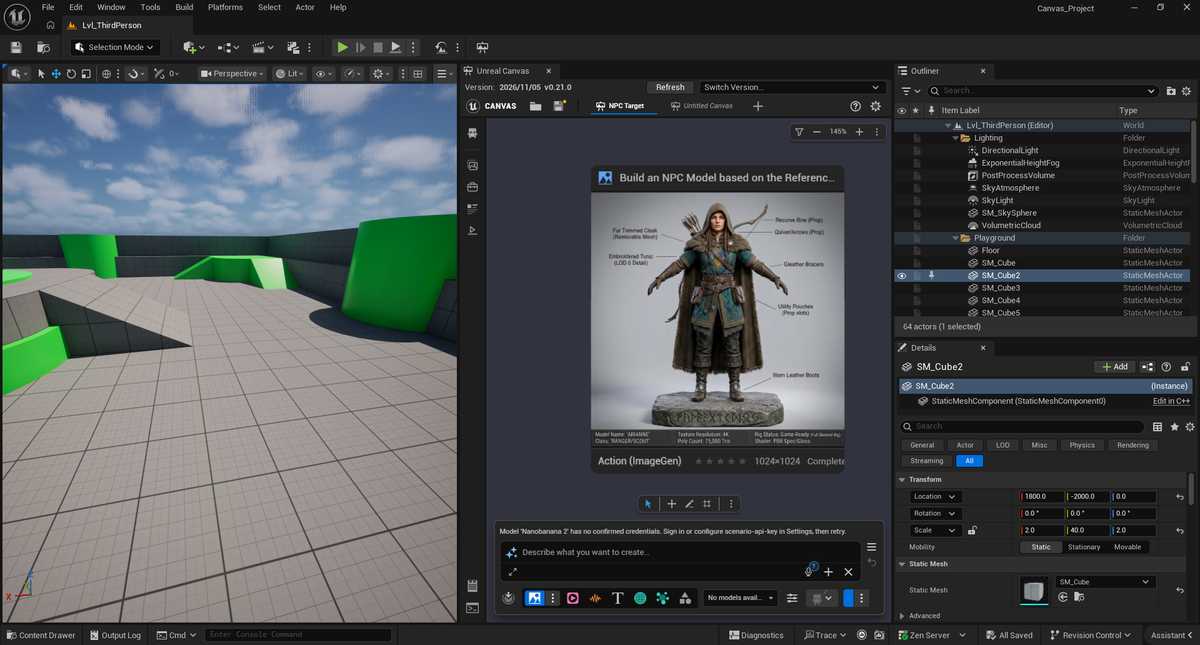
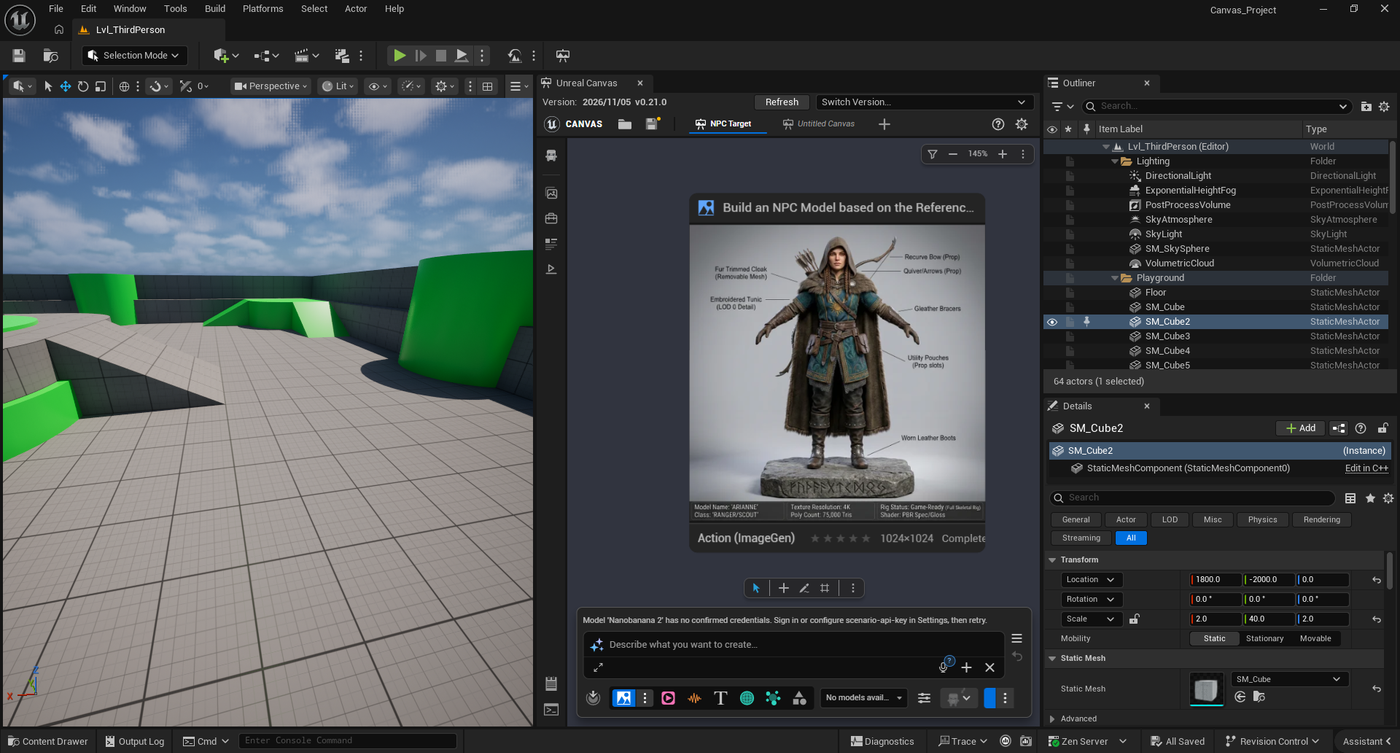
Epic Games added an experimental tool called Unreal Canvas to the Unreal Engine 5.9 Preview. It is a shared workspace where people and AI agents generate images, video and 3D meshes. Results can return to the level as cutouts, meshes, splats and imported assets.
Epic released the Preview ahead of its AI MegaJam, which runs November 12 to 15. Its docs say Preview builds are not meant for production projects.
How Unreal Canvas Works

Epic’s docs say Canvas brings references, generated results, notes and reusable processes together in one place. Every element is readable by both the user and AI models. Users arrange references and notes for context, then describe the task.
Canvas runs as a web app and inside Unreal Editor, under Tools > Unreal Canvas. Epic says it can generate concept art, images, 3D meshes and video from prompts, reference images or a user’s own scenes. It preserves composition and camera perspectives, and tracks the work through connected prompts and generation graphs.
A companion plugin, Unreal Canvas Spatial Annotations, lets users mark regions and actors in the 3D scene with prompts.
Movie Render Graph Reaches Agents
The Unreal Canvas Bridge plugin exposes Movie Render Graph rendering to Canvas as MCP tools. It requires Epic’s Model Context Protocol plugin.
Epic’s wider 5.9 notes add Unreal MCP improvements and a Toolset Registry that controls which toolsets agents may use. The Unreal Assistant gets a tool-access setting with five levels: Ask, Read, Edit, Auto or Full. Epic says the in-editor assistant panel works with agents including Claude Code, Codex, Cursor and OpenCode.
What You Need to Run It
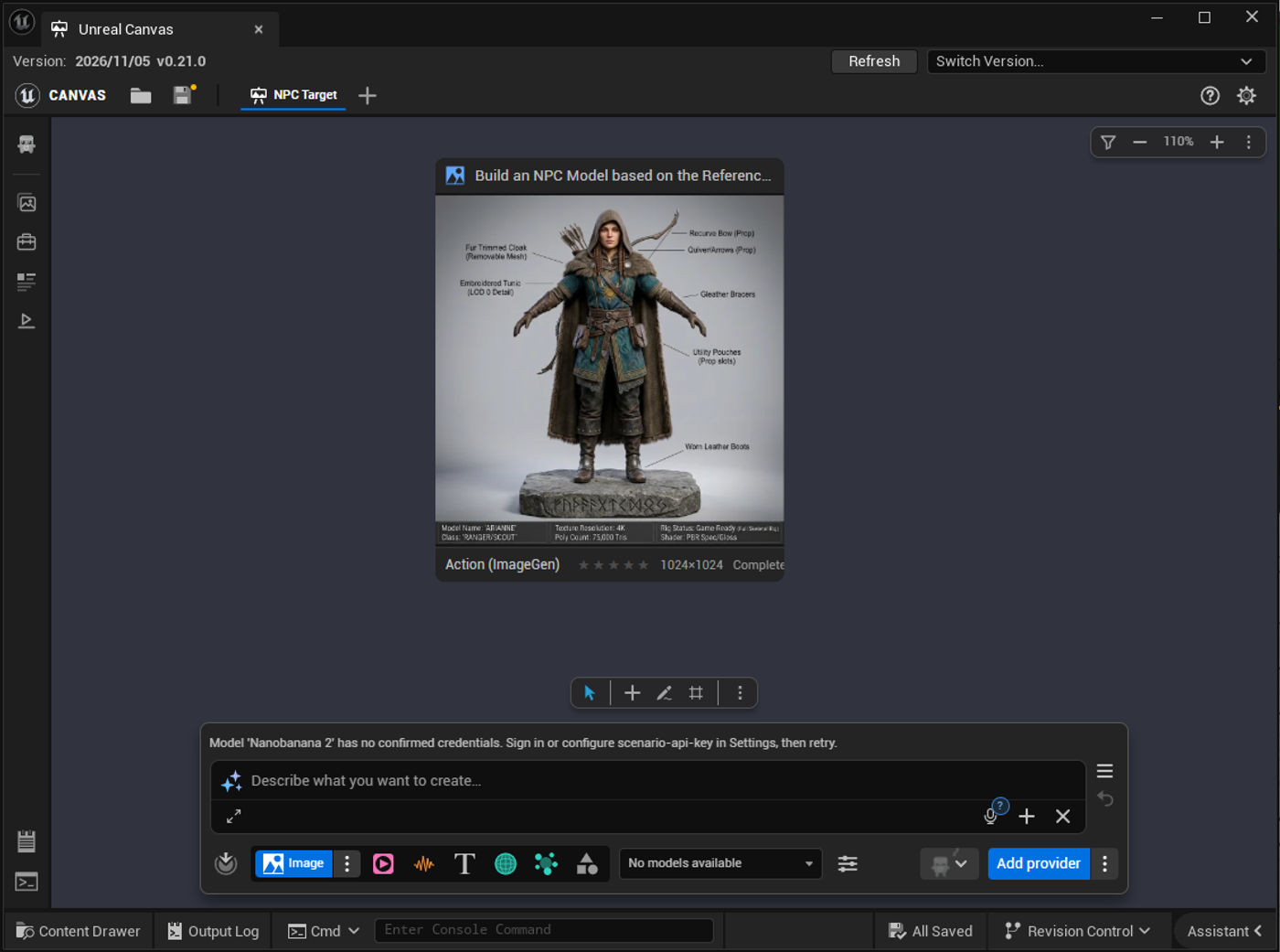
Epic lists Unreal Engine 5.9 Preview and an NVIDIA GPU with at least 8GB of VRAM. Users enable the Unreal Canvas Bridge, Spatial Annotations and Model Context Protocol plugins. Generation runs through providers connected with the user’s own API keys.
On first launch, Canvas downloads a server, local AI models and video tools, several gigabytes in total, after the user agrees.
The Preview is available through the Epic Games Launcher and GitHub, and Epic plans a full 5.9 release next year.
Competitive Context
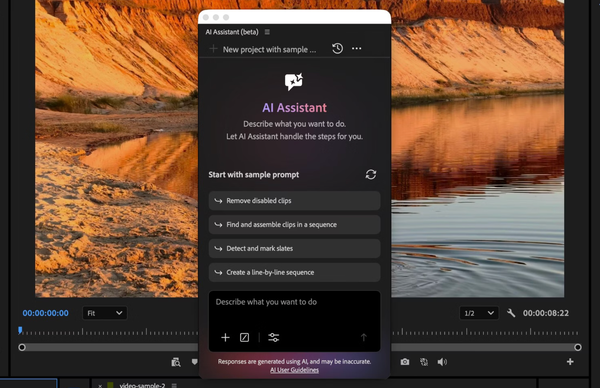
Adobe pitched a related idea on Tuesday. Firefly Graph (beta) lets creators build repeatable workflows that combine AI models and Adobe’s tools, and Firefly Boards now works with Adobe’s Creative Agent for storyboards and mood boards.
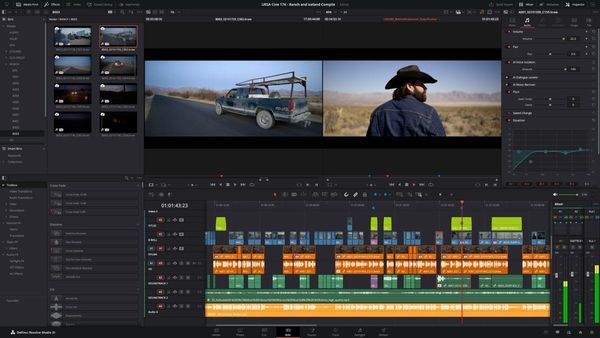
Blackmagic built an MCP server into DaVinci Resolve Studio 21.1 in September, according to YMCinema. Epic’s version is tied to a game engine and a 3D scene, while Adobe’s and Blackmagic’s center on edit timelines and project files.
The Signal in the Noise
Canvas is a workspace, not a model. Epic’s docs say the models available depend on the keys a user adds, the model catalog and the project’s restrictions. They also say agent usage can carry its own costs.
The Movie Render Graph tools are the piece most relevant to film and previs teams, though Epic frames Canvas around Unreal projects generally. It is also a rough build. Epic says the Preview had a shorter QA pass than usual and that it is still cleaning up some agent-written code.
The AI push is not universally welcome. Engadget noted that just over half of game developers think generative AI is bad for the industry, per a report published earlier this year.
Would you generate previs frames inside Unreal with an agent, or does that work belong outside the engine?