Unreal Engine 5.8 Is Here, and Epic Just Opened the Engine to AI Agents
Unreal Engine 5.8 launched today as Epic's last major UE5 release, bringing an official AI agent plugin and full-body markerless capture to MetaHuman Animator.


Unreal Engine 5.8 launched today at Unreal Fest Chicago, and it's a notable one. Epic has called it the last planned major Unreal Engine 5 release on its roadmap, as the company shifts development focus to UE6.
Support for UE5 will continue for bug fixes and regressions, and Epic says it may add another official release if circumstances warrant it.
That framing matters. This isn't a routine point update. It's Epic closing out a five-and-a-half-year engine generation, and 5.8 is stacked with the kind of features that suggest they wanted to go out strong rather than coast.
Two things stand out most for filmmakers and virtual production teams: an official AI integration plugin, and a meaningful jump in markerless performance capture.
Epic opens the engine to AI agents
Unreal Engine 5.8 introduces an Experimental MCP (Model Context Protocol) plugin, an open standard that lets LLM systems connect to and understand both the engine and a given project. Developers can use any model they choose to help build assets and systems, extend engine functionality, or run testing and optimization tasks.
The plugin ships with built-in exposure to core systems including Blueprints, assets, levels, materials, and meshes, and Epic says developers can extend it with their own functionality.
This is Epic catching up to, and formalizing, something the community had already been building. Independent MCP servers for Unreal have existed for over a year, letting tools like Claude or Cursor manipulate actors, materials, and Sequencer timelines through natural language requests. With 5.8, that capability moves from third-party experiment to first-party, Epic-maintained infrastructure.
For solo filmmakers and small studios using Unreal for virtual production or previsualization, the practical upside is the same one driving AI adoption across the rest of the industry: faster iteration on scene setup, asset placement, and testing, without needing to hand-code every step.
Full-body performance capture from a single camera
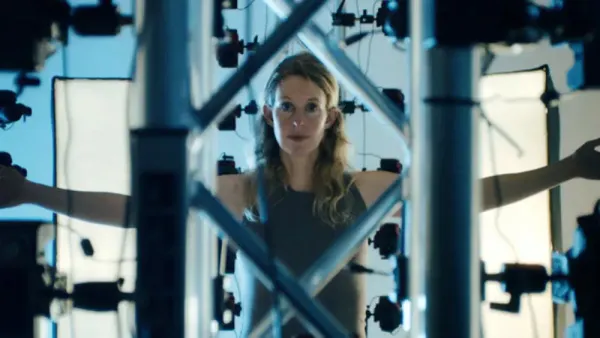
The other headline feature for filmmakers lives in MetaHuman. MetaHuman Animator can now capture a full character performance, face, body, or both at once, from a single off-actor camera. Epic says there's no need for mocap rigs, helmet cameras, or markers; a webcam is enough to capture high-quality head-to-toe animation.
That capability comes from a new MetaHuman Animator Markerless Motion Capture Plugin, which is currently available for Windows.
This is a real leap from where MetaHuman Animator started. The tool launched in UE5.2 as a face-only solution built around iPhone footage. Extending it to full-body capture from a single webcam removes one of the bigger cost barriers in virtual production: suits, optical rigs, and dedicated capture stages.
It's not the only markerless option on the market. AI-driven tools like Move AI's Move One and DeepMotion's Animate 3D already offer single-camera, full-body capture with their own subscription models. What MetaHuman Animator adds is direct, native integration with MetaHuman's rig, skipping the retargeting step that third-party tools usually require.
Virtual production gets two upgrades to Production-Ready status
Two tools long used in virtual production workflows graduated out of beta this release.
Live Link Hub is now Production-Ready, and can monitor live video feeds from multiple sources directly within its interface. It also supports controlling devices over IP across a mocap studio, letting teams monitor and synchronize Live Link data, editor clients, and recording devices from one place.
Movie Render Graph also reaches Production-Ready status, with a redesigned, graph-based Queue Window that gives artists direct control over render settings. This release adds support for nDisplay and for isolating lights to render shots with different values for intensity, color, or other properties on any light type. A new Accumulation Depth of Field feature delivers cinematic, film-style focus effects similar to the Path Tracer, at a lower performance cost.
Competitive Context
Unreal's biggest real-time rendering rival, Unity, doesn't currently ship anything directly comparable to a first-party MCP plugin or to MetaHuman's integrated full-body markerless capture. Unity's strength has traditionally been mobile and indie-friendly tooling rather than the high-fidelity virtual production and digital-human pipeline Epic has built around MetaHuman and Live Link.
On the AI-integration front, Epic isn't first to market, several community-built MCP servers for Unreal already exist on GitHub with hundreds of exposed editor tools, but Epic's entry as the maintainer changes the calculus. Community plugins break when the engine API changes; an Epic-maintained plugin won't have that problem, and it signals official endorsement of AI-agent workflows inside the editor rather than tolerance of unofficial ones.
The Signal in the Noise
The framing as the final major UE5 release is the real headline here, more than any single feature. Epic typically uses these inflection points to ship things it considers durable enough to carry into the next generation, and an officially supported AI integration layer, plus a markerless full-body capture pipeline, both look like bets on where the next several years of production workflows are headed.
For solo filmmakers and small teams already using Unreal for virtual production, the MetaHuman Animator update is the more immediately useful change. It removes hardware cost as a barrier to full-body digital human capture, which previously required either an optical mocap stage or a suit-based system.
The MCP plugin is more forward-looking. Its value will depend on how quickly third-party tools and workflows build around Epic's official version rather than the existing community ones, and on how reliable AI-driven actions inside the editor actually prove to be in production use.
Specs & Pricing
Unreal Engine remains free to use, with Epic's standard royalty applying only after a shipped product earns over $1 million in revenue. MetaHuman is free for use within Unreal Engine on commercial projects with no separate licensing fee, provided assets aren't exported and resold outside the engine. The new MetaHuman Animator Markerless Motion Capture Plugin is available now for Windows, exact distribution details are available on Epic's developer site.
Resources & Reads
Epic's full Unreal Engine 5.8 release notes cover the complete feature list, including Mesh Terrain, Chaos Cloth, mobile workflow updates, and more not covered above.