What Is Mubert? A Look at the AI Music API Behind Picsart, Restream, and More
Mubert generates 3 million AI music tracks a month for products like Picsart and Restream. Its new API update replaces "reroll and hope" with real editing tools. Here's what the company does, and why the update matters.


Mubert generates roughly 3 million unique music tracks a month, and there's a real chance you've heard its output without ever knowing the name. The company builds an AI music API that powers background soundtracks and generative music inside other companies' products, Picsart's UGC tools reach 150 million app users through the integration, and Restream uses it to soundtrack live streams in real time.
Mubert just shipped a significant API update, launched today on Product Hunt, that's worth understanding both as an introduction to what the company does and as a real shift in how AI-generated music actually gets used.
What Mubert Actually Is
Mubert positions itself less as a consumer music generator, in the mold of Suno or Udio, and more as infrastructure other products build on top of. Its API generates royalty-free, DMCA-free music by text prompt, image, BPM, or activity type, across roughly 150 genres and moods, meant to be embedded directly into apps, games, video editors, and UGC platforms rather than used as a standalone creation tool.
The company's two core modes reflect that product-first orientation. Generation mode produces a downloadable track for a specific piece of content, the mode most relevant for filmmakers and video editors scoring a finished project. Streaming mode delivers continuous, real-time generative music via WebRTC with sub-second latency, built for live and interactive use cases like livestreams, ambient audio apps, or games where the soundtrack needs to keep going indefinitely and respond to changing conditions.
Mubert's plans also include sublicensing rights, meaning a company building a platform where users create and publish their own content can offer Mubert-generated music as a built-in feature, with those end users able to use the resulting tracks commercially. That's a meaningfully different business model than a typical stock-music license, it turns AI music from a cost line into a product feature a platform can offer its own users.
The New Update, and Why It's a Real Shift
Mubert's Head of AI, Kirill Kiryanov, framed the update around a specific complaint about how most AI music APIs work: "Repeat-until-success is a mechanic, not a workflow," he wrote. "Most music APIs hand you a finished track and leave you to reroll."
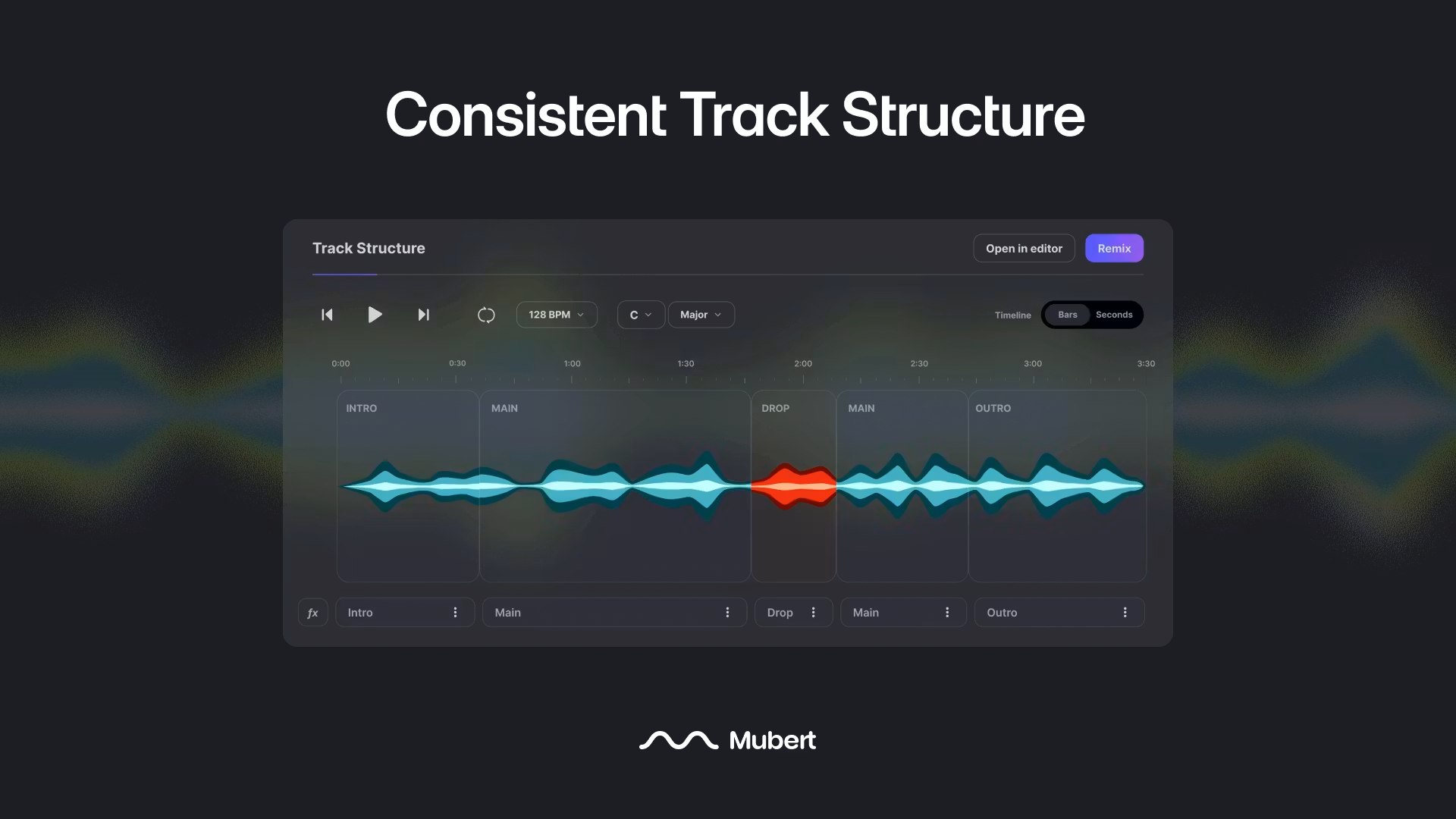
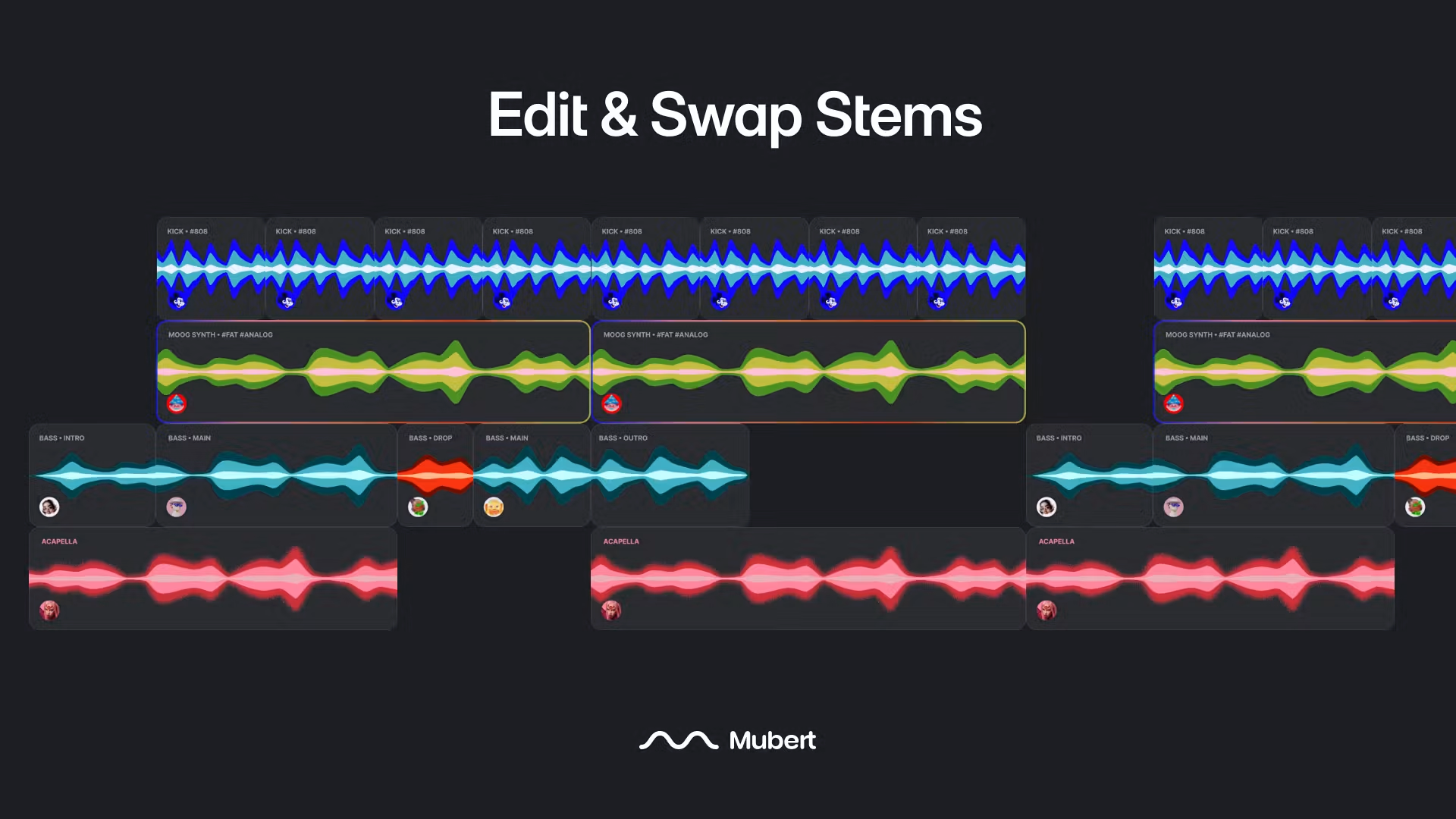
The update replaces that reroll cycle with actual editing tools. Tracks can now be edited after generation rather than only regenerated from scratch, individual stems can be swapped out instead of rerolling an entire track hoping for a better result, and a new generation engine is built specifically to hold consistency, so a requested change produces the same kind of change reliably rather than an unpredictable new result each time.
The update also adds long-form generation, tracks up to two hours long, and expanded real-time streaming capability, both aimed at use cases like ambient background music, extended livestreams, or looped content that previously required stitching together multiple shorter generations.
Built-In AI Agent Integration
A notable addition: Mubert shipped "Skills" for Claude and Codex, packaged instructions that let AI coding agents already know how to call Mubert's API correctly. Kiryanov's framing: adding a Skill turns integration into "a conversation rather than a spec-reading exercise," letting a developer describe what they want in natural language rather than manually reading API documentation to wire up the integration themselves.
For anyone building a tool that needs generative background music, an AI video editor, a livestreaming app, a game, that's a real reduction in integration friction, though it's also a genuinely new pattern worth watching more broadly: API providers building direct hooks into AI coding assistants as a distribution and adoption strategy.
Competitive Context
Mubert's closest competitors, Soundverse and similar production-focused APIs, tend to offer deeper compositional control and richer creative tooling but less emphasis on Mubert's core strength: massive-scale, low-latency streaming infrastructure.
Mubert's positioning has always leaned toward instant, reliable background audio at scale rather than song-level creative composition, and this update narrows that gap somewhat without fully abandoning the infrastructure-first identity that's made it useful for high-volume partners like Picsart.
The Signal in the Noise
The "slot machine" framing is worth sitting with beyond just Mubert's own product. A meaningful amount of frustration with generative AI tools broadly, music, image, video, comes from exactly this pattern: no real control over output, just repeated attempts hoping for something usable.
Mubert building editing and stem-level control directly into its API, rather than leaving users to reroll, is a genuinely useful direction, and one other generative audio and video tools will likely need to follow as the category matures past pure novelty.