The Real Math Behind Artlist's Seedance 2.5 Unlimited Reversal
Artlist pulled unlimited Seedance 2.5 access just days after a heavily-promoted launch. The compensation offer sounds generous, until you do the actual math on what it delivers.


Artlist ran a promotion offering unlimited Seedance 2.5 generations on its AI Creator plans from August 7-10. By August 10, unlimited access to that specific model was gone, pulled just days after customers bought in, while every other model on those plans, Kling, Veo, Nano Banana, and the rest, remained untouched. The compensation offer and the actual math behind it are what turned this into a real conversation across AI film Twitter rather than a quiet policy footnote.
What Artlist Actually Said
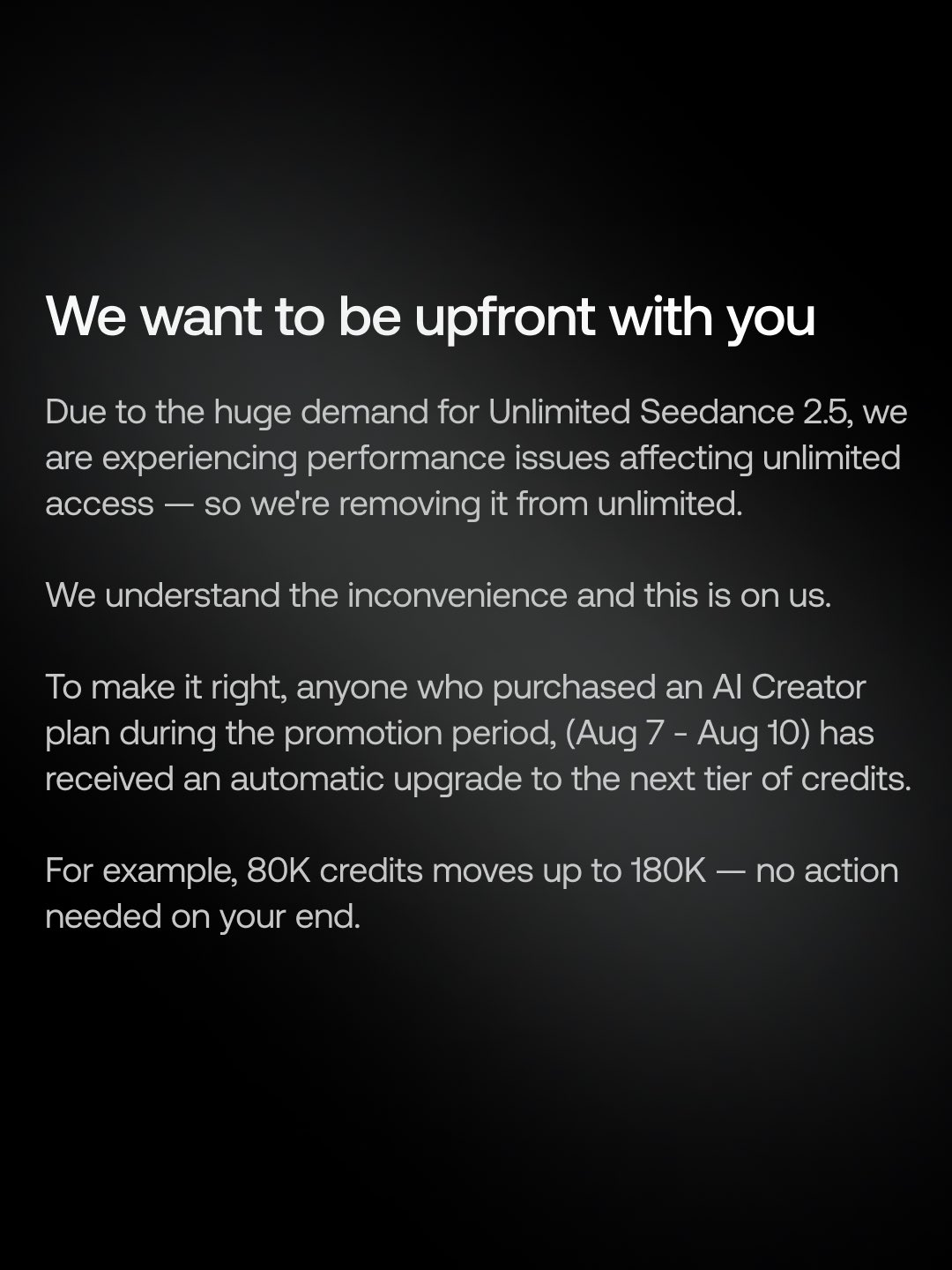
Artlist's public statement was direct about the cause: "Due to the huge demand for Unlimited Seedance 2.5, we are experiencing performance issues affecting unlimited access, so we're removing it from unlimited. We understand the inconvenience and this is on us."
As compensation, anyone who purchased an AI Creator plan during the promotional window received an automatic upgrade to the next credit tier, Artlist's own example cites 80,000 credits moving to 180,000, framed as needing no action from the customer. In a follow-up reply to a customer, Artlist clarified the scope further: "only Seedance 2.5 unlimited access is changing; all other models on your plan remain the same," and offered a full refund option at artlist.io/support for anyone who bought during the promo and isn't satisfied.
Why the Compensation Math Didn't Land Well
What a rug pull.
— The Bloooop (@The_Bloooop) August 10, 2026
So not only does @Artlist_io lie on the unlimited 2.5 seedance plan which is actually suppose to be capped at 80gens a day (which i do find to be very reasonable) but the very next day they completely take unlimited 2.5 away from the people who signed up.… https://t.co/GJSCJLhk6Z
This is where the actual substance of the backlash lives. Creator @The_Bloooop did the math publicly: 180,000 credits works out to roughly 6 minutes of usable Seedance 2.5 footage at 720p, or about 15 minutes at 480p, and that's before accounting for failed generations, a routine, expected part of any AI video workflow, not an edge case. Going from genuinely unlimited generation to a hard, specific credit ceiling that low is a real, steep downgrade in practical terms, not just a policy technicality.
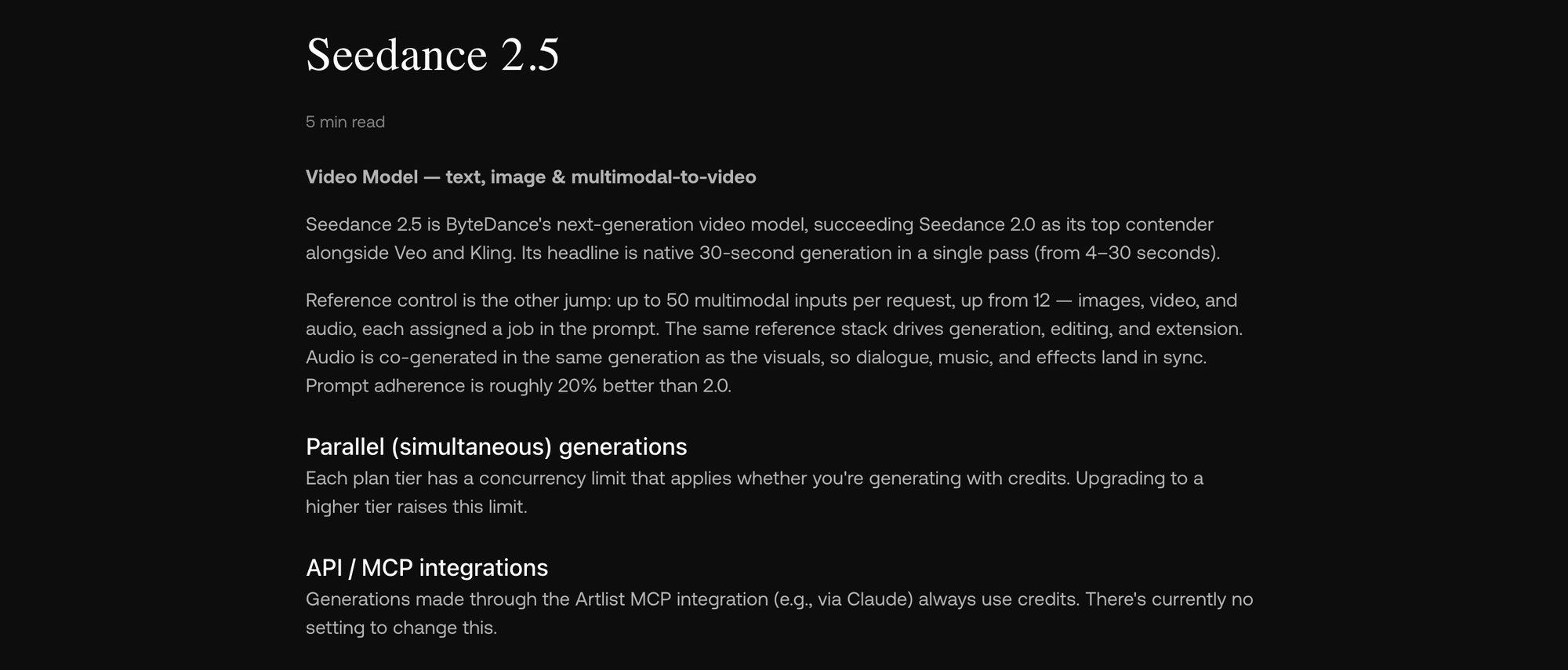
Artlist's own published terms for the original offer specified real limits worth knowing regardless of this reversal: a daily allowance of 2,550 seconds at 720p (about 85 thirty-second clips), Reference-to-Video generation always drawing from credits even under Unlimited, and concurrency caps varying by plan tier. So "unlimited" was never literally unlimited in the most technical sense, but it was a meaningfully more generous daily ceiling than a flat 180,000-credit monthly allowance replacing it now.
The Disclosure That Was Already There
Worth noting directly: Artlist's help documentation already included language anticipating exactly this kind of change, before this incident happened. It states plainly that "model availability under Unlimited can change over time," and that Artlist doesn't "currently guarantee a pro-rated refund or account credit if Seedance 2.5's Unlimited status changes." That's a real, pre-existing disclosure, not something added after the fact to cover this specific situation.
That doesn't fully neutralize the frustration, the actual execution, pulling a heavily-promoted unlimited offer days after a promotional push rather than with real advance notice, is a legitimately different experience than a slow-rolled policy change communicated in advance. But it does mean this wasn't entirely undisclosed risk for anyone who'd read the fine print before buying in.
Why This Matters Beyond One Platform
This connects to a broader pattern worth understanding across the AI video aggregator space covered on this beat: "unlimited" plans built around a specific, high-demand model are genuinely hard to sustain economically, since the aggregator is still paying real per-generation compute costs to the underlying model provider (ByteDance, in this case) regardless of what it charges subscribers. When a specific model's popularity outpaces what a flat subscription price can actually cover, something has to give, and "quietly reduce the model's availability under the plan" is one of the more disruptive ways that adjustment can surface for existing customers.
Competitive Context
This is a useful cautionary data point for anyone evaluating aggregator platforms generally, Pika's API Club, fal, kie.ai, and others covered previously on this beat, all bundle access to popular, expensive-to-run models like Seedance 2.5 into flat-rate plans. An "unlimited" claim tied to a specific hot model is worth reading with real skepticism about sustainability, not just at face value, and checking the platform's own terms of service for exactly this kind of "we can change model availability" language before committing to an annual plan.
The Signal in the Noise
Artlist responded fast, offered compensation without requiring customers to ask, and provided a full refund path, a genuinely better-than-average response to a real service failure. But the compensation itself doesn't actually replace what was promised, roughly 6 minutes of usable output a month is a different product than unlimited generation, and creators doing that math in public is exactly why this became a real conversation rather than a quiet policy update nobody noticed.
Have you been affected by this change, or run into similar "unlimited" plan walk-backs on other AI platforms? Curious what you've experienced, drop it in the comments.