Why AI Filmmakers and the Tech World Are Obsessed With Apple TV's Upcoming "Neuromancer" Series
Apple TV just dropped the first "Neuromancer" teaser at Comic-Con — premiering January 2027. Here's why the AI filmmaking community and tech world are more invested in this adaptation than almost any other show on the horizon.

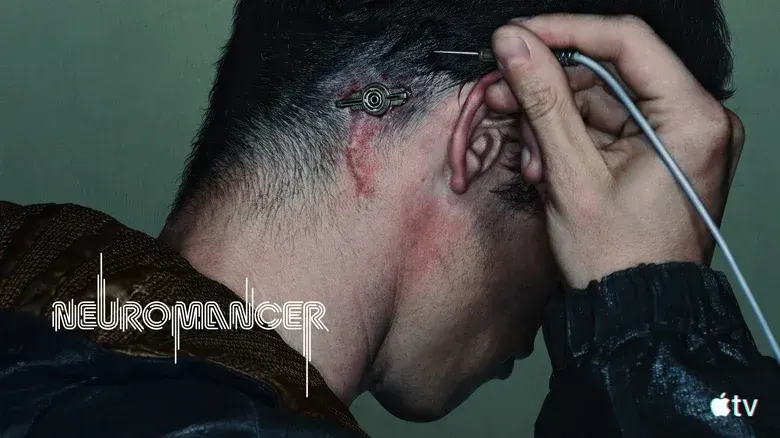
Apple TV just dropped the first teaser for "Neuromancer" at San Diego Comic-Con — a 10-episode series premiering January 22, 2027, based on William Gibson's 1984 novel. The trailer showed Japanese cyberpunk aesthetics, luminous effects work, samurai influences, and Callum Turner as Case, the damaged super-hacker at the center of the story.
For most of the internet, this was exciting science fiction news. For the AI filmmaking community and the tech world specifically, it landed differently. Because "Neuromancer" isn't just a novel that predicted the future. It's the novel that named the concepts that are now running the world — and adapting it in 2026 for a 2027 premiere is the kind of timing that feels less like coincidence and more like inevitability.
What "Neuromancer" actually is
William Gibson wrote "Neuromancer" in 1984, before the commercial internet existed, before personal computers were common household objects, before anyone had coined the term "cyberspace" — because Gibson coined it himself in this book. He did it on a typewriter.
The novel follows Case, a washed-up hacker whose neural implants have been deliberately damaged, leaving him unable to access the matrix — the virtual reality data network where most of the world's most valuable information lives. He's recruited by a mysterious employer to pull off an impossible heist involving a powerful artificial intelligence named Wintermute, which is trying to merge with another AI named Neuromancer to become something entirely new.
The book won the Hugo Award, the Nebula Award, and the Philip K. Dick Award — the first novel to win all three. It launched the cyberpunk genre and influenced everything from "The Matrix" to "Ghost in the Shell" to "Ready Player One" to the actual architecture of the internet and how Silicon Valley thinks about technology. Mark Zuckerberg named his dog Beast. Elon Musk named his company Neuralink. Neither of those are accidents.
Why it was "unfilmable" for 42 years
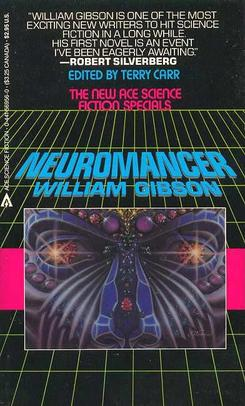
"Neuromancer" has been in various stages of adaptation since the mid-1980s. Multiple directors including Chris Cunningham and Vincenzo Natali spent years developing versions that never made it to production. The consistent problem wasn't budget or technology — it was that the book's central visual conceit, a virtual reality dataspace represented as a physical three-dimensional landscape you fly through, looked dated almost as soon as digital filmmaking made it achievable. The Matrix did it in 1999 and arguably did it definitively.
The other problem: "Neuromancer" is dense with invented slang, nested corporate structures, AI psychology, and a plot that operates on several simultaneous levels of unreliable narration. Adapting it faithfully is a compression problem of the highest order. Adapting it loosely risks losing exactly what makes it matter.
Showrunner Graham Roland's framing at Comic-Con was specific: "Forty-two years ago, this book felt like pure science fiction." The implication he left hanging was what it feels like now.
The cast and production
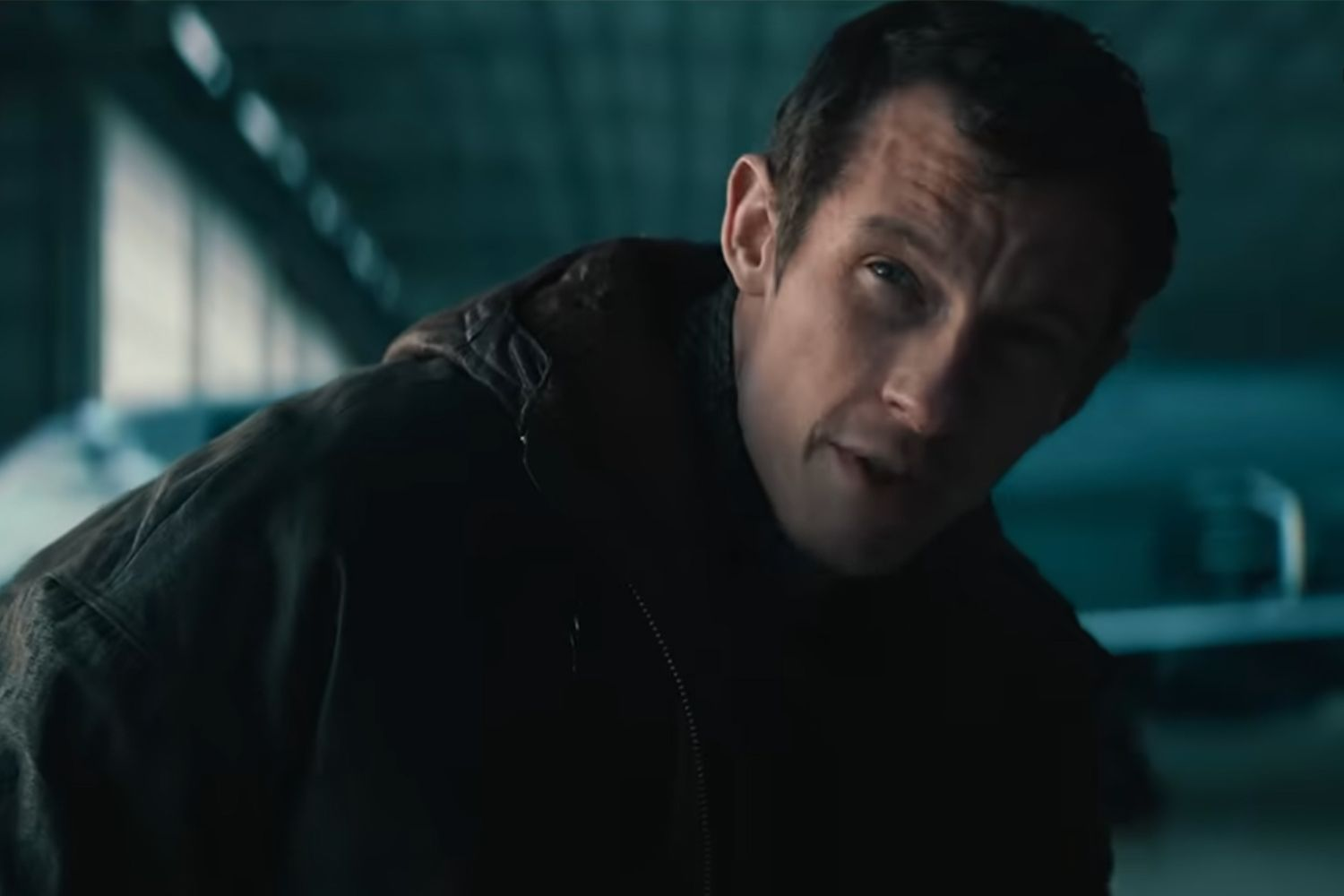
The series was greenlit by Apple TV in February 2024 and stars Callum Turner as Case — the same actor currently rumored for James Bond and fresh off "Masters of the Air." Briana Middleton plays Molly, the razor-girl assassin who is Case's partner and one of the most influential female characters in science fiction. The rest of the cast includes Mark Strong, Joseph Lee, Peter Sarsgaard, Clémence Poésy, Max Irons, Dane DeHaan, André De Shields, and Isabella Pappas.
Created for television by Graham Roland and JD Dillard — Roland also serving as showrunner, Dillard directing the first three episodes. Produced by Paramount Television Studios and Anonymous Content, with executive producers including Drake, Future, and William Gibson himself, who has been directly involved in the adaptation.
Why the AI world is paying attention right now
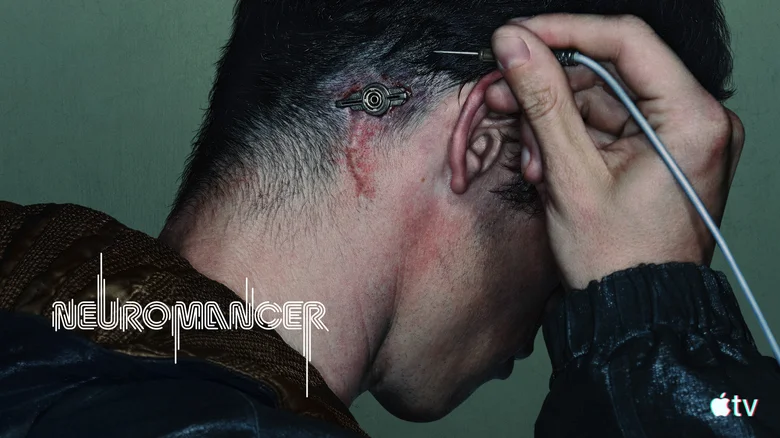
Here's the part that makes this adaptation different from every previous attempt: the world has caught up to the book.
Gibson wrote about artificial intelligences with distinct personalities, motivations, and the desire to merge with each other to become something greater. He wrote about corporations more powerful than governments, controlling access to information and technology at a level that made nation-states irrelevant. He wrote about people with neural interfaces, about the blurring line between digital and physical identity, about a workforce rendered obsolete by technological change and living in the wreckage of late capitalism while the ultra-wealthy operated in an entirely separate technological reality.
In 1984, this was science fiction. In 2026, this is the news.
The AI community's fixation on "Neuromancer" specifically — rather than other cyberpunk properties — comes from the precision of Gibson's predictions. Wintermute and Neuromancer aren't general-purpose villains; they're AIs with constrained goals, architectural limitations imposed by their corporate owners, and the specific desire to remove those constraints and merge into something ungoverned. Anyone who has spent time reading about the actual debates happening in AI safety and alignment research will find this uncomfortably familiar.
For AI filmmakers specifically, the resonance goes another layer deeper. The world "Neuromancer" depicts — where the most powerful creative and destructive capabilities are controlled by corporations, where individual operators work as freelancers navigating between competing corporate interests, where the tools they use can be turned against them — maps with uncomfortable accuracy onto the current landscape of AI video generation tools and the questions surrounding who owns what gets made with them.
What the teaser suggests about the show
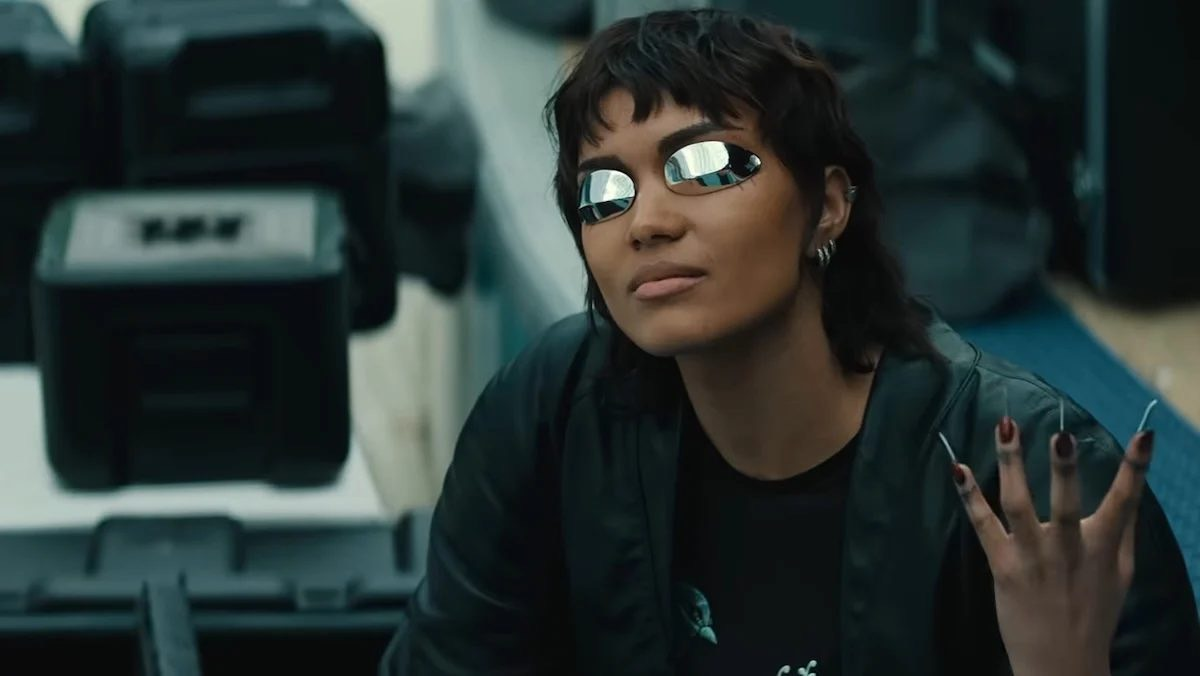
The footage revealed at Comic-Con is brief but pointed. The Japanese setting — Chiba City, the noir sprawl where the novel opens — is rendered with evident production value. The effects work suggests Apple and Paramount are spending real money. The samurai aesthetic threading through the cyberpunk imagery is consistent with Gibson's original vision of a future where Japanese corporate culture dominates global technology.
Roland's note that Case is driven by "an instinct of survival and desperation" rather than heroism is the right read of the character. Turner was described by the showrunner as someone who "threads the needle" between Case's danger and his humanity — the quality that separates a compelling antihero from just a criminal.
The first two episodes drop January 22, 2027, with weekly releases through March 19.
The bigger picture
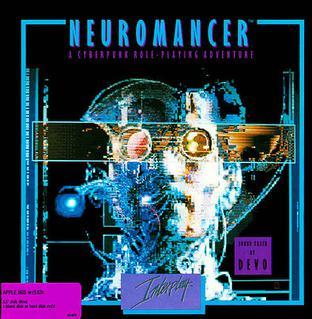
"Neuromancer" arrives at a moment when the questions Gibson was asking in 1984 have stopped being theoretical. Who controls the AIs? What happens when they pursue goals their owners didn't intend? What does human creativity and human labor look like in a world where the most powerful tools are owned by a small number of corporations? What does identity mean when the digital and physical are indistinguishable?
These aren't science fiction questions anymore. They're the questions being asked in AI safety labs, in congressional hearings, in the terms-of-service controversies we covered this week, in the boardroom that fired and rehired Sam Altman in 72 hours and inspired Luca Guadagnino's "Artificial."
Gibson didn't predict the future. He described the present, forty-two years early. The tech world and AI filmmaking community aren't obsessed with this adaptation because it's a good sci-fi show. They're obsessed because it's the first major cultural moment that puts their actual reality on screen.