How the Gaffer and Lighting Programmer Behind "Obsession" Made an LED Volume Work on an Indie Budget
Gaffer Christopher Oh and lighting programmer Bicher Barmada break down how they lit the indie film Obsession on an LED volume using manual console busking instead of a media server pipeline.

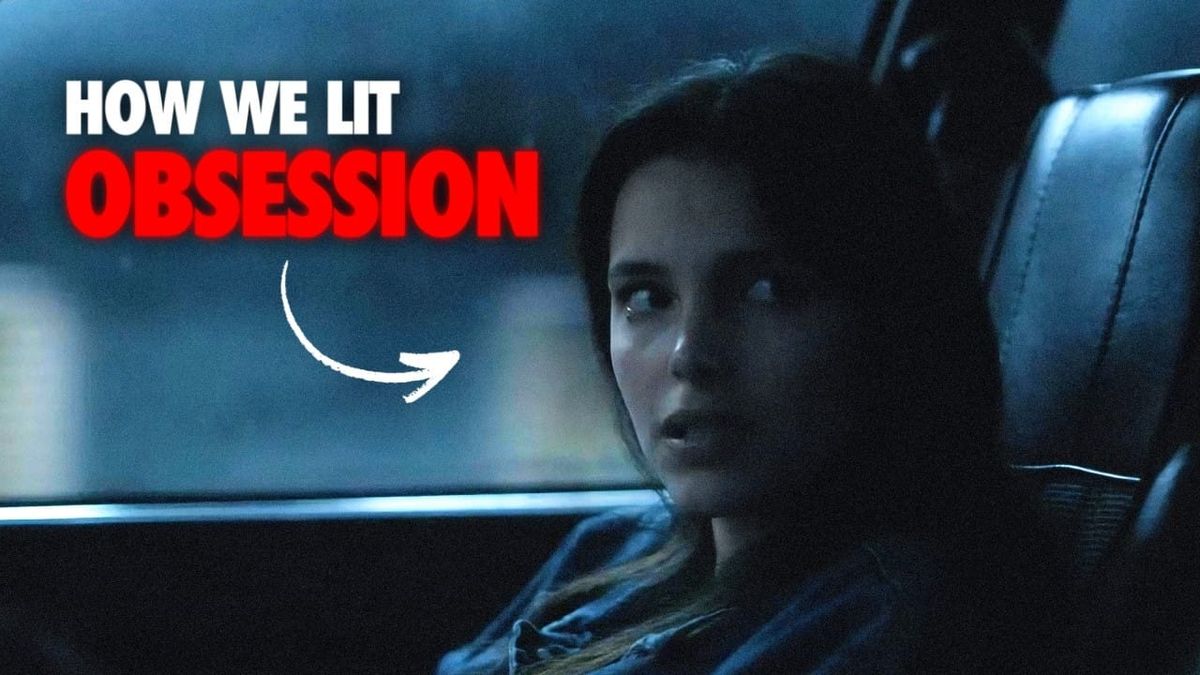
LED volumes have a reputation for requiring massive infrastructure — media servers, Unreal Engine pipelines, dedicated technical crews. The lighting breakdown for the independent film Obsession makes the case that skilled console programming can substitute for a lot of that complexity, if you bring the right people in early enough.
Gaffer Christopher Oh and lighting programmer Bicher Barmada walk through their approach in a detailed technical breakdown for CinePacks, covering pre-visualization strategy, busking technique, light spill management, and the production design choices that made the volume footage hold together on screen.
The Rig
The lighting package for Obsession included CreamSource SpaceX units, SkyPanel S60s, Vortex 8s, and Aputure 600Cs, controlled through an HS Hub 4 console. That's a capable but not extravagant package for virtual production — the kind of rig an indie production can realistically put together without a studio infrastructure budget.
The console choice matters here. Rather than integrating with a media server or Unreal Engine — the approach used on high-end productions to automatically sync practical lighting with the LED wall content — the team chose to manually program and busk all lighting cues directly on the console. That decision shaped everything else about how they approached the shoot.
Pre-Visualization as the Foundation
The production's approach to pre-vis was unusually rigorous for an indie budget. Christopher Oh and Bicher Barmada used 3D scanning software to model the LED volume space before the shoot and plan rig placement based on the actual geometry of the environment.
As Christopher Oh describes it: "This was a film that was made on a low budget... we were all on top of each other... being able to visualize the space ahead of time... is really important."
That pre-work is what made the manual busking approach viable. Without a media server automatically pushing lighting states, every cue had to be programmed and executed by hand. Knowing exactly where the lights were going to live relative to the volume wall before day one meant the team could build a console map that reflected the actual space rather than troubleshooting placement on set.
The Light Spill Problem
The central technical challenge of any LED volume shoot is light spill — practical fixtures bleeding onto the LED wall surface and contaminating the image being projected behind talent. On a high-end production with a media server pipeline, spill can be partially compensated for in real time. On a manual console setup, it can't.
Gisha Rmana is direct about the stakes: "The biggest thing coming in was we knew the second we had lights spilling on the video wall... you're kind of cooked."
The solution was a combination of careful rig placement established in pre-vis, fixture selection based on controllability, and on-set discipline around how lights were positioned and angled relative to the wall. The pre-visualization work paid off here specifically: because the team had modeled the space in advance, they could identify potential spill paths before the shoot rather than discovering them on the day.
Busking as a Substitute for Media Server Integration
Busking — manually triggering and adjusting lighting cues in real time from the console during a take — is the technique that allowed Obsession to achieve dynamic, responsive lighting without the cost and complexity of Unreal Engine integration.
The tradeoff is that busking requires a skilled programmer who can read the shot and react in real time, and it requires that programmer to have been involved early enough to have a thorough console map built before production starts. Christopher Oh's advice is explicit: "If you're going to do volume wall... bring your programmer in on pre-pro because volume and console integration makes all of this so much easier."
That's the core lesson of the entire breakdown. The manual approach is viable, but it front-loads the work into pre-production rather than distributing it across an automated pipeline.
Production Design Choices That Helped
The team used haze and grease on car windows as a production design tool to add texture that helped ground the LED wall footage. Both techniques introduce light scattering that softens the boundary between the physical set and the projected environment — a relatively simple practical intervention that makes the composite feel more cohesive without requiring any changes to the technical pipeline.
Maintaining lighting continuity across multiple camera angles was the other significant challenge. With a manual console and no automated sync, every angle change required the lighting programmer to adjust cues to match the new camera position relative to the LED content. The pre-built console map was what made that fast enough to not kill the shoot schedule.
Competitive Context
The high-end benchmark for LED volume production is The Mandalorian workflow — ILM StageCraft, full Unreal Engine integration, automated lighting response to camera position. That pipeline produces exceptional results and costs accordingly.
What Obsession demonstrates is that the gap between that approach and a well-executed manual console workflow is narrower than the budget difference suggests. The technical problems are the same — spill management, continuity across angles, matching practical lighting to LED content — but the solutions are lower-tech and more labor-dependent rather than software-dependent.
For indie productions that can't afford media server integration, the lesson is that skilled personnel with proper pre-production time can substitute for a significant portion of the automation.
The Signal in the Noise
The specific advice Christopher Oh gives about bringing the lighting programmer into pre-production is the most actionable takeaway from this breakdown. It's also the advice most likely to get cut from an indie budget during the planning phase, when pre-pro feels like overhead and the programmer's day rate feels like a cost that can be deferred until the shoot.
The Obsession breakdown is a concrete argument for why that deferral is expensive. The pre-vis work and the console mapping done before the shoot are what made the busking approach possible on set. Without that front-loaded investment, the manual pipeline doesn't work.
Specs & Pricing
Lighting package: CreamSource SpaceX, SkyPanel S60s, Vortex 8s, Aputure 600Cs. Console: HS Hub 4. Pre-vis: 3D scanning software (specific tool not named in the video). Pricing for individual components varies — the Aputure 600C retails at approximately $1,899, SkyPanel S60s at approximately $4,500 new (widely available used). Current pricing on all components available via B&H and individual manufacturer sites.
Resources & Reads
- CinePacks full breakdown video: https://www.youtube.com/watch?v=We67HyWtMBQ
- CreamSource SpaceX product page: https://www.creamsource.com/spacex
- Aputure 600C product page: https://www.aputure.com/products/ls-600c/
- SkyPanel S60 product page: https://www.arri.com/en/lighting/led/skypanel/skypanel-s60