This Free Open-Source App Is Everything ElevenLabs Is, Minus the Monthly Bill
Voicebox is a free, open-source voice cloning studio that runs entirely on your own machine — no subscription, no cloud, no audio data leaving your computer. Here's what it does and the caveats worth knowing.

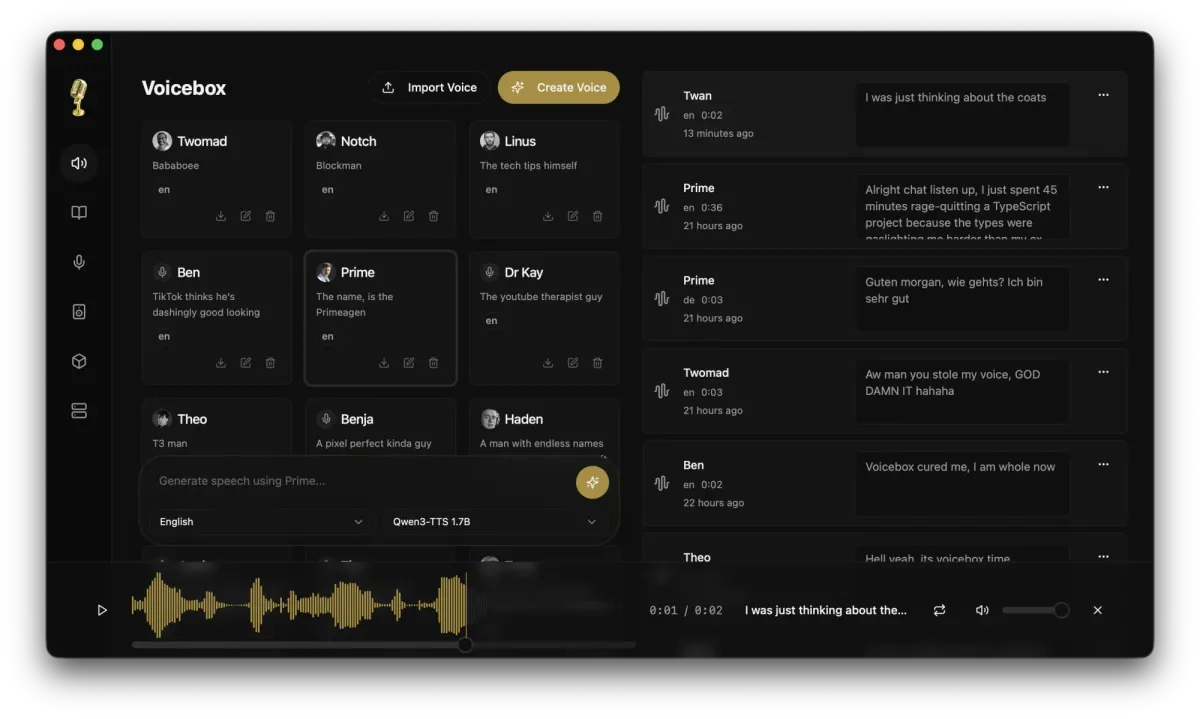
A solo developer named Jamie Pine quietly built something that's now going viral across AI communities: Voicebox, a free, open-source voice cloning studio that runs entirely on your own machine. No subscription. No cloud. No audio data leaving your computer.
ElevenLabs — the commercial voice cloning platform most content creators and filmmakers are familiar with — starts at $22/month for its Starter tier and $99/month for Creator. Every voice you generate sends audio to their servers. Voicebox does the same core thing locally, for free, and has just hit 22,000 GitHub stars.
What it actually does
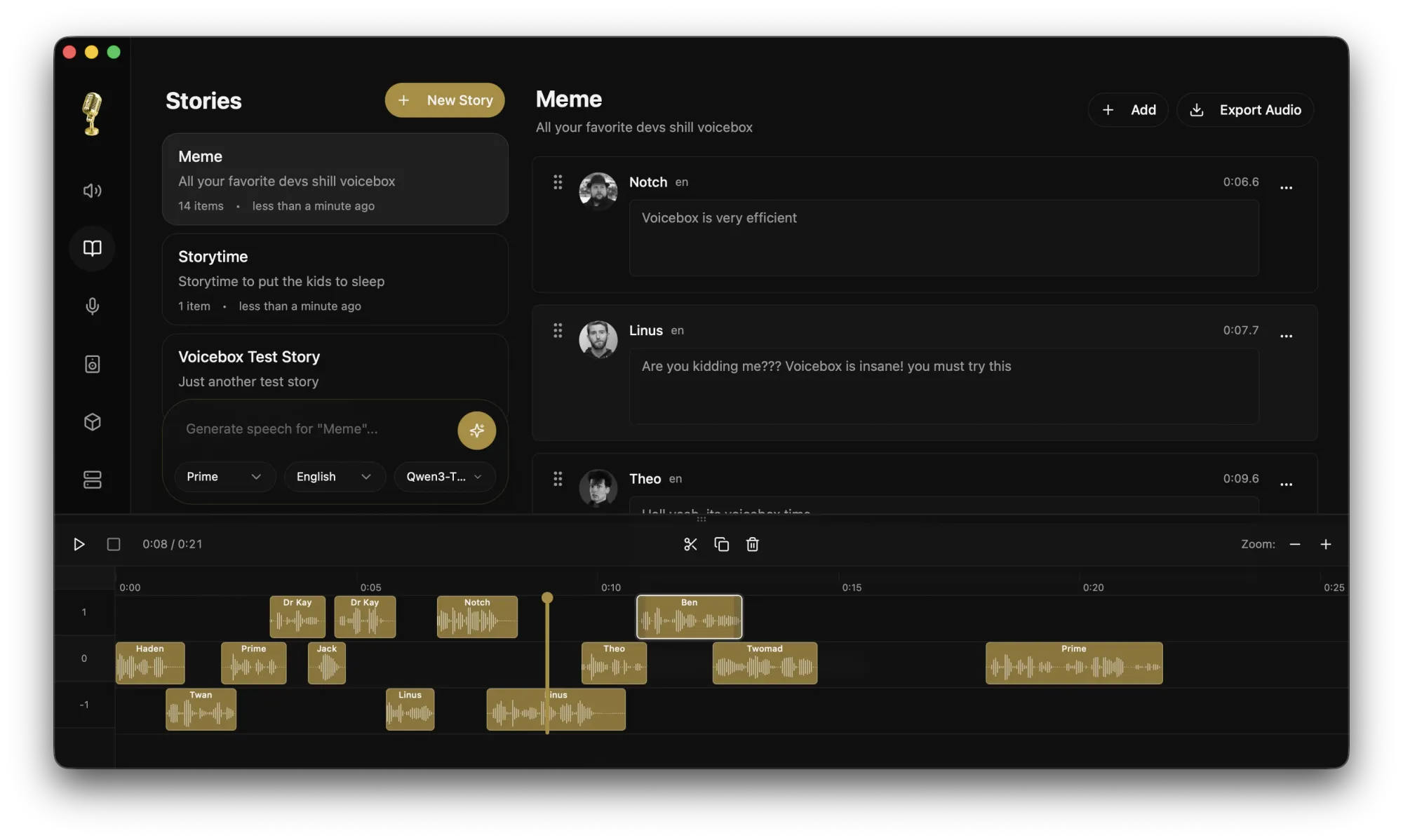
Voicebox describes itself as a local-first alternative to both ElevenLabs (voice output) and WisprFlow (voice input) in a single app. The feature set is more substantial than most open-source alternatives manage:
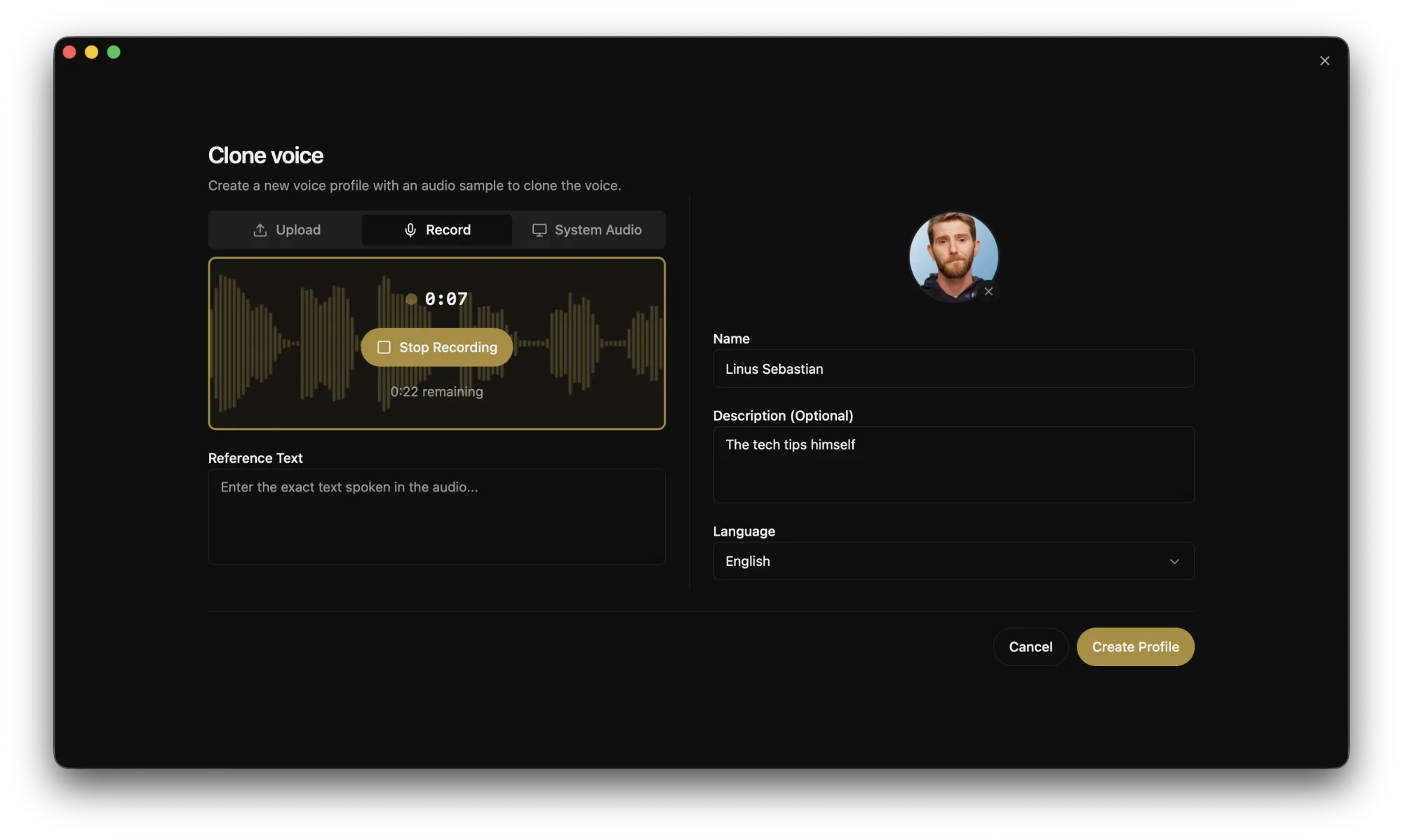
- Voice cloning — zero-shot cloning from a few seconds of audio reference sample, or 50+ preset voices via Kokoro and Qwen CustomVoice
- 7 TTS engines — Qwen3-TTS, Qwen CustomVoice, LuxTTS, Chatterbox Multilingual, Chatterbox Turbo, HumeAI TADA, and Kokoro — each with different strengths, switchable per generation
- 23 languages — generate speech in languages you don't speak, in your own cloned voice
- System-wide dictation — hold a global hotkey anywhere on your machine, speak, release; the transcript lands in whatever text field is focused
- Post-processing effects — 8 audio effects via Spotify's Pedalboard library, including Robotic, Radio, Echo Chamber, and Deep Voice presets
- Voice personalities — attach a free-form personality description to any voice profile; a local Qwen3 LLM rewrites your input text in that voice's character before it speaks
The AI agent integration is the part going viral
The feature that's driving most of the X buzz: Voicebox ships a built-in MCP (Model Context Protocol) server, which means any MCP-aware AI agent — Claude Code, Cursor, Windsurf, Cline — can call Voicebox to speak back to you in a cloned voice. One tool call (voicebox.speak) and your AI agent has a voice. You can even bind different voices to different clients — Claude Code speaks in one voice, Cursor in another.
To be precise about what this is and isn't: Voicebox gives AI agents the ability to speak through your cloned voice, not Claude itself gaining native voice capability. The voice output comes from Voicebox running locally; the AI agent just calls it via MCP. That's still a genuinely interesting integration, but worth understanding accurately rather than through the "Claude speaks in your voice" viral framing.
Caveats worth knowing before you install
The project is moving fast and has some rough edges worth being aware of:
- Active macOS malware flag (#369 in their GitHub issues) — ongoing, not yet fully resolved
- Some MCP bugs currently open, including audio scrambling over MCP (#780) and dotted tool names that don't comply with Claude Desktop's naming pattern (#790)
- The developer has launched a $VOICEBOX Solana token as a funding mechanism — this generated community concern, was addressed transparently in the GitHub issues, and the dev says the app will remain free and open-source regardless. Worth knowing the context before assuming the project is purely non-commercial.
- ElevenLabs still leads on raw output quality ceiling for professional commercial voice work — Voicebox is genuinely excellent but not identical to the commercial benchmark
Who this is actually for
For content creators, filmmakers, and developers who need voice cloning for non-commercial use, value privacy, or simply can't justify a recurring subscription for occasional voice work — Voicebox is worth trying. The local-first architecture means your voice profiles, audio captures, and generated speech never leave your machine, which matters for anyone working with unreleased content or client materials.
For high-volume commercial voice work where output quality ceiling matters most, ElevenLabs still leads.
Key Specs:
- License: Open-source, free (Apache 2.0)
- TTS engines: 7 (Qwen3-TTS, Qwen CustomVoice, LuxTTS, Chatterbox Multilingual, Chatterbox Turbo, HumeAI TADA, Kokoro)
- Languages: 23
- Voice cloning: Zero-shot from a few seconds of audio
- Dictation: System-wide global hotkey, Whisper-powered
- MCP integration: Built-in MCP server, works with Claude Code, Cursor, Windsurf, Cline
- Platforms: macOS, Windows (Linux in progress)
- Prerequisites: Bun, Rust, Python 3.11+, Tauri
- GitHub stars: 22,000+
- Price: Free