Promise AI Is Making a Horror Feature With Bloody Disgusting's Founder and a Backrooms Producer
Promise AI is developing a horror feature with Bloody Disgusting's founder and a Backrooms producer attached. Here's why that pedigree is a bigger signal than the project itself.

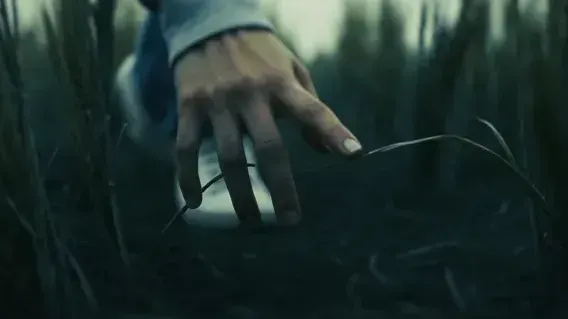
Promise, the AI-native studio backed by Peter Chernin and Google, is developing a psychological horror feature called Touch Grass, based on "dead internet theory," the internet subculture belief that much of online activity is now bot- and AI-generated rather than human. The project isn't just notable for who's making it, it's notable for who's attached: Bloody Disgusting founder Brad Miska and Backrooms executive producer Chris White are both producing.
Who's Actually Involved
Dave Clark, Promise's chief creative officer and, per Deadline, "a noted AI creator and filmmaker" in his own right, is directing. The project is original material, Clark's own idea, brought directly to White and Miska rather than acquired existing IP. Promise co-founders George Strompolos and Jamie Byrne join Clark as executive producers alongside him.
Miska is producing on behalf of Be Afraid Media, the horror company behind Dread Central. His track record is genuinely significant: founder of Bloody Disgusting, co-developer of the found-footage V/H/S franchise, and a producer credited with helping bring more than 100 horror films to screen, including the Terrifier franchise, whose third installment grossed $90 million worldwide against a budget in the low single-digit millions.
Chris White's involvement carries specific, direct relevance here. White was the executive producer who helped bring Kane Parsons' original Backrooms YouTube videos to wider industry attention, work that led directly to Peter Chernin becoming a producer on the eventual film adaptation. That film, made by Atomic Monster and released by A24, grossed $395 million worldwide and became A24's highest-grossing release ever, after originating as a 4chan creepypasta before spreading through YouTube and TikTok.
Why the Backrooms Comparison Actually Matters Here
This isn't an incidental comparison, it's the explicit model Deadline's own reporting draws. Backrooms proved that grassroots, internet-native genre material could scale into major theatrical success when paired with real industry infrastructure and a director who understood the source material's specific texture. White having a direct hand in identifying and developing that opportunity, and now being attached to Promise's own genre feature, is a real signal about the kind of pipeline Promise may be trying to build: internet-native concepts developed with actual horror industry credibility behind them, rather than AI output presented on its own.
The Premise Itself
Dead internet theory, the film's actual subject matter, is a genuinely well-suited premise for an AI-native studio to tackle: a psychological horror concept built around the fear that online spaces are no longer reliably populated by real people, made using the same generative technology the theory is anxious about. Deadline describes the film as tapping "into the fear that we can no longer trust what is real," a premise that gets a particular, self-aware charge given who's making it.
Why This Signals Something Beyond One Film
This connects directly to the broader question of what real career and industry pathways exist for AI-native studios. Promise's inclusion in Disney's 2026 Accelerator cohort, covered previously here, showed a major studio backing Promise's production tools directly. Touch Grass shows something different and arguably more significant: an established, commercially successful horror producer and a Backrooms-connected executive both choosing to attach their own reputations to an AI studio's original genre material, not licensing existing horror IP to an AI company, but developing something new together.
That's a meaningfully different kind of validation than a funding round or an accelerator slot. It's genre industry professionals with real box office track records betting their own credibility on the concept working.
The Signal in the Noise
Horror has consistently been the genre most willing to take chances on unconventional origins and production methods, found footage, viral internet horror, ultra-low-budget breakouts, and Backrooms itself is the most recent, biggest proof of that pattern.
Touch Grass is a genuine test of whether that same openness extends to AI-native production specifically, with real industry names willing to stake their reputation on the answer being yes. Worth watching how this actually gets financed, distributed, and received once more concrete details emerge, since attachment announcements and a finished, released film remain two very different stages of proof.
Do you think horror is genuinely the right genre to prove out AI-native filmmaking, or does the "dead internet" premise feel like it's leaning too hard into the AI angle? Curious where you land, drop it in the comments.
Resources & Reads
- Promise AI Developing Horror Feature 'Touch Grass'; Dave Clark Directing, Brad Miska And 'Backrooms' EP Chris White Producing — Deadline
- Promise Leads a Group of Companies Disney Is Backing to Prepare for the AI Filmmaking Revolution — BRC
- Where Does AI Filmmaking Actually Lead? Careers, Festivals, and One Big Misconception — BRC