Runway's New Media Router Automatically Picks the Best AI Model for Your Request
Runway's new Media Router automatically selects the best image, video, or audio generation model based on your preferences for cost, quality, or speed. Here's how it works — and what it reveals about Runway's strategy.

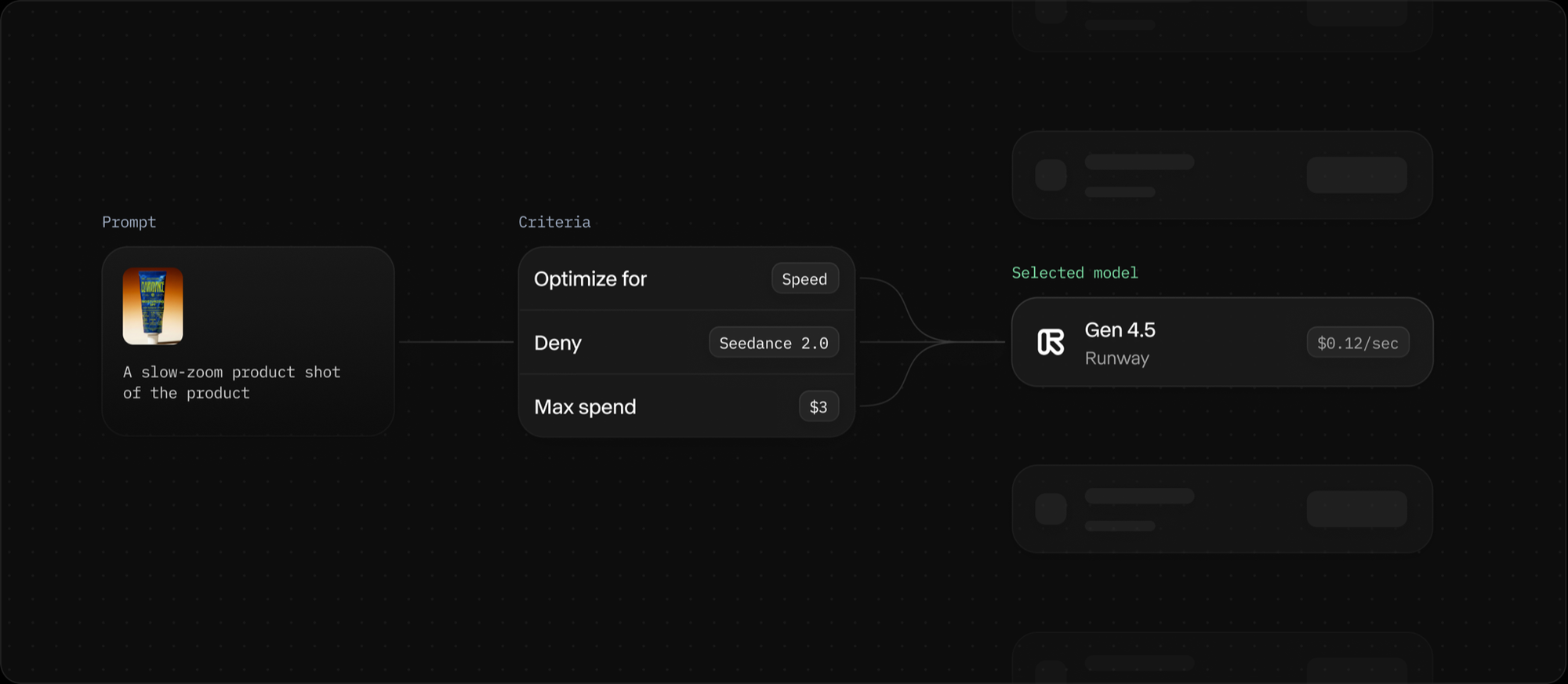
Runway just launched Media Router — a tool that automatically selects the best image, video, or audio generation model for a given request based on how a developer defines "best": cost, quality, or latency. Instead of hand-picking a model for every prompt, you set your preferences once and the router handles the selection.
It's live now in Runway Dev, the developer platform Runway launched earlier this month that provides API access to a growing roster of third-party models alongside Runway's own.
How it works
Introducing Runway Media Router.
— Runway (@runwayml) July 23, 2026
The first preference-optimized router for generative media. Instead of hand-picking a model for every request, you define what "best" means once, for cost, quality, or latency, and the router selects the right video, image, or audio model… pic.twitter.com/yeZdJAjHVj
The concept is straightforward. You define your preferences — prioritize quality, minimize cost, optimize for speed — and when a generation request comes in, the router evaluates those preferences against its knowledge of every model's strengths and routes the request accordingly. The "intelligence layer" behind the routing is based on expertise Runway's in-house creative team has developed evaluating model output across every media type: how video models handle motion, how image models handle composition, how voice models handle lip sync.
That intelligence layer isn't new — it's the same routing technology Runway already built for its own Agent product. Media Router packages it for outside developers to use via API.
One notable preference option: developers can filter by model origin. Runway's CPO Anthony Maggio specifically noted that some businesses building their own products aren't comfortable working with models from China, and may want to set a preference for American model providers — a consideration likely to become more common given the current regulatory environment around Chinese AI models.
The strategic context worth understanding
The TechCrunch exclusive on this launch includes a detail worth naming directly: Runway's last dedicated frontier video model was Gen-4.5, released in December 2025. Its text-to-video and image-to-video models no longer lead the major benchmarks — today's top 20 include models from Google, ByteDance, and Alibaba. On the same day this article publishes, Black Forest Labs launched FLUX 3 with benchmark numbers that claim to beat Runway Gen-4.5 in 77% of human-preference comparisons.
Runway is aware of this. The Media Router, alongside Runway Dev and its growing API-first strategy, is the company's answer to staying competitive in a market where the best model changes every few months. Rather than asking developers to bet on any single model staying ahead, Runway is betting that the orchestration layer — the intelligence that routes between models, chains them together, and surfaces the right one for each job — is where durable value lives.
As co-founder and co-CEO Anastasis Germanidis put it to TechCrunch: "The orchestration increasingly matters a lot because people are building entire campaigns with those models, or they're building entire finished multi-scene generations out of those models."
Or more simply: if Runway can't always have the best model, it can be the layer that knows which model is best right now.
Who's already using Runway Dev
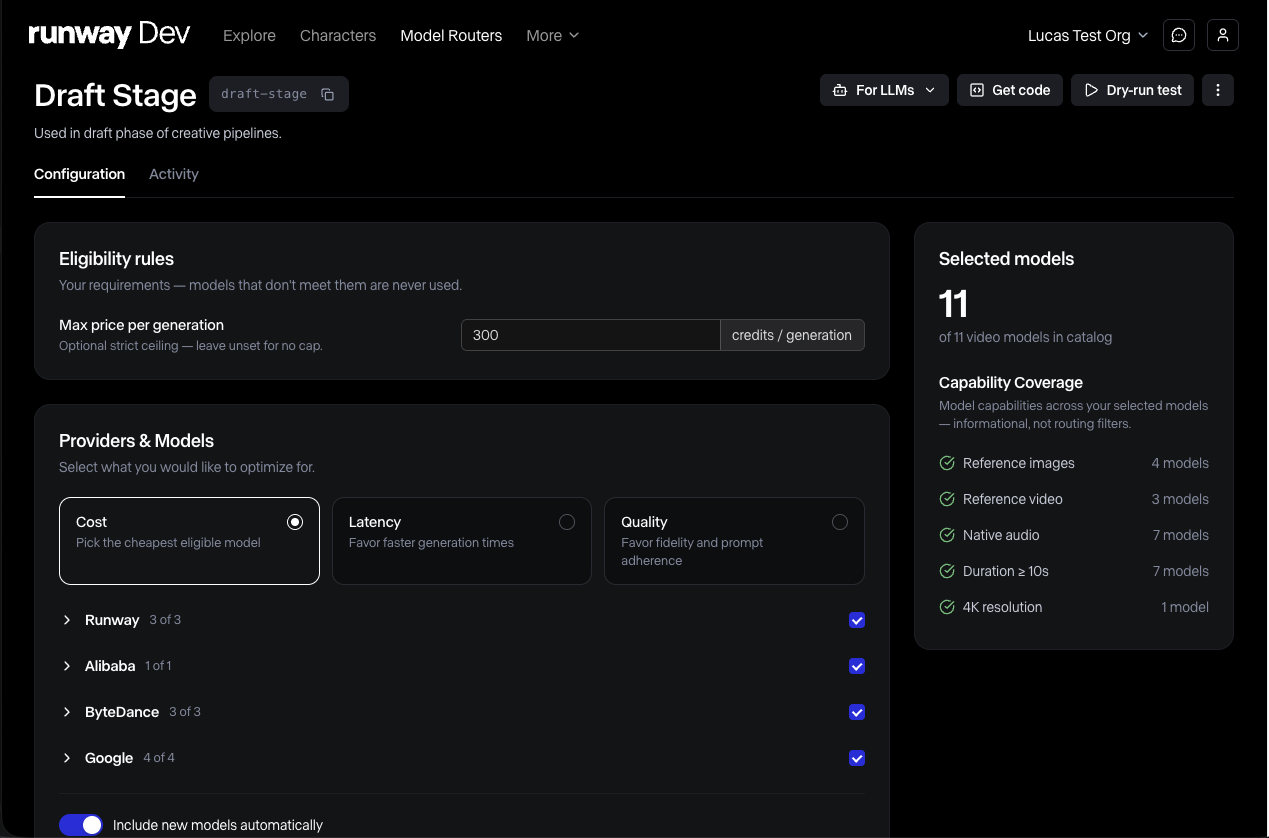
Runway Dev's existing customers include Adobe, Cloudflare, ElevenLabs, Expedia, Shutterstock, and Quora — companies building media generation directly into their own products via API rather than routing users to Runway's app. The Media Router extends what those customers can do: rather than hard-coding a specific model into their pipeline, they can let the router adapt as better models become available.
What this means for the broader AI video landscape
The Media Router launch is as much a reading of the market as it is a product. Runway is explicitly acknowledging that the generative media model space has become too fragmented and fast-moving for developers to track manually — "Most developers are not spending the time to really understand the capabilities of each of these models," Maggio told TechCrunch — and positioning itself as the layer that does that work for them.
That's a meaningful strategic pivot for a company that was, until recently, primarily competing on the quality of its own models. Whether the orchestration bet pays off depends on whether Runway's routing intelligence actually outperforms what developers would choose themselves — and whether that advantage justifies staying in Runway's ecosystem when newer models keep arriving from competitors who aren't sharing revenue with a routing layer.