Seedance 2.5 Is Now Available via API — 30-Second Single-Shot Clips and 3D Camera Blockouts Are the Headline Features
ByteDance just opened Seedance 2.5 to developers — 30-second single-shot clips, 50 reference inputs, and 3D camera blockouts are the headline features. Here's what's real, what's still unverified, and the legal context that hasn't changed.

ByteDance has opened public API access to Seedance 2.5, its most significant video model update yet, built around three capabilities that push well past what the competition currently offers: 30-second clips generated in a single continuous pass, up to 50 multimodal reference inputs per generation, and camera control driven by 3D blockouts. Alongside the new model, ByteDance has also updated the shipping Seedance 2.0 to native 4K with 10-bit output.
Before getting into what's new: the legal context around Seedance hasn't changed. SAG-AFTRA issued a statement in February 2026 condemning Seedance 2.0 for "blatant infringement" including "the unauthorized use of our members' voices and likenesses."
The MPA denounced it. Disney, Universal, and every major Hollywood studio sent cease-and-desist letters. ByteDance has since launched a rights-governance platform called Volcano Ark — but as of this writing, the outstanding legal disputes have not been publicly resolved, and there is no confirmed US retail availability date for Seedance 2.5. The practical guidance for commercial use remains the same: work from your own assets, properly licensed material, or synthetic characters.
With that clearly stated, here's what's actually in the update.
The 30-second single-shot generation
The headline number is duration — and it matters more than it sounds. Seedance 2.5 generates a full 30-second clip in a single pass with no stitching and no extension passes. Its predecessor topped out at roughly 15 seconds natively, reaching 30 seconds only by joining separate generations end to end — and seam points are precisely where AI video breaks down. Faces drift, wardrobe shifts, lighting rolls, room geometry quietly rearranges.
A genuinely continuous half-minute take is the longest native single-shot generation among the major models. For commercial work, short-form drama, and anything requiring coherent long takes, the absence of a seam is the feature, not the duration.
ByteDance also lists a beta long-video mode reaching 180 seconds. The company frames 30 seconds as the reliable tier and three minutes as experimental. Treat the 180-second claim accordingly until independent testing exists.
50 reference inputs and what that actually unlocks
Seedance 2.5 accepts up to 50 multimodal reference materials in a single generation — images, video clips, audio files, scripts, and style guides — against Seedance 2.0's ceiling of around 12. Most competing models accept a handful of reference images. At 50 inputs, you can carry a character, a location, a product, a lighting look, and a sound bed into the same shot simultaneously. That's a different order of reference capacity than anything available today.
3D camera blockouts
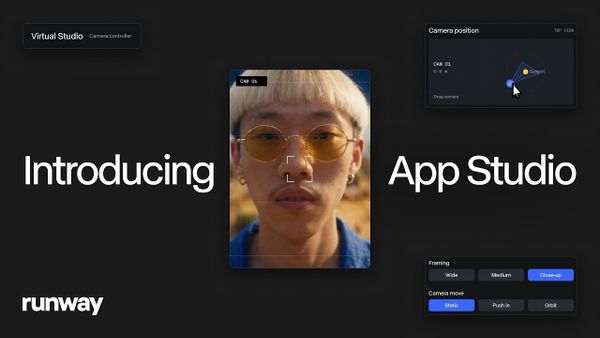
The feature that may interest cinematographers most: Seedance 2.5 accepts 3D white-model blockouts as camera control input. A blockout is the rough, untextured 3D geometry used in layout and previs to lock camera position, staging, and blocking before a shot is lit or rendered. ByteDance describes this as the first 3D white-box preview function in a video generation model. In practice, it means committing to a camera move and composition in a 3D environment and then generating the final clip from that specification, rather than describing the camera in text and hoping the model interprets it correctly.
The other camera control addition: reference-to-video control using green-screen plates, giving a second option for shot-specific camera work.
Seedance 2.0 quietly gets a 4K upgrade
The upgrade available right now, without the new model: Seedance 2.0 has been updated to native 4K with 10-bit color, up from a ceiling around 1080p to 2K. For anyone already using Seedance 2.0 in a production workflow, that's an immediate improvement requiring no model change.
What's still unknown four days after launch
CineD's coverage of this release is worth being honest about: everything quantitative right now comes from ByteDance or its product pages. There is no model card, no independent benchmark score for 2.5 specifically, and no neutral long-form test. Any arena score circulating on social media for 2.5 should be treated as provisional. For Seedance 2.0, the shipping model holds a real independent benchmark lead on text-to-video-with-audio and image-to-video. For 2.5, the only honest position is: run it against a real shot list and see.
Where it sits against Veo, Kling, and Runway
Kling 3.0 generates natively at 4K and 60fps with a globally available API at around $0.075 per second, and its AI Director mode chains several distinct camera setups into one 15-second generation. Veo 3.1 still has the best synchronized dialogue and lip-sync. Runway has the most refined control surface for film work. Seedance 2.5's genuine claimed lead is duration and reference breadth — not resolution — and the 3D blockout camera control, if it performs as described, addresses exactly the axis where text-based camera prompting consistently falls short.
Access and cost
API access runs through BytePlus ModelArk internationally and Volcano Engine for enterprise accounts, with consumer access through Dreamina, Jimeng, and CapCut. ByteDance has not published an official rate card for 2.5. For reference, Seedance 2.0 runs near $0.06 per second on standard tiers and around $0.02 on discounted fast tiers. Independent estimates put a 30-second 2.5 clip somewhere between $1 and $2 at lower settings, rising steeply at 4K. These are projections, not quoted prices — verify before budgeting.
The Signal in the Noise
30-second single-shot generation and 3D camera blockout control are genuine capability advances, not incremental spec bumps. If the output holds up under sustained independent testing — and that testing doesn't exist yet — Seedance 2.5 would represent a meaningful step toward AI video that can serve real production workflows rather than isolated clip generation. The unresolved legal picture is a real constraint that doesn't disappear because the technology improved. Both things are true simultaneously.