What's a Film-Out? The Expensive Process Making Digital Movies Look Like Film
Some of the most talked-about digital cinematography actually gets converted back to real film before release. Here's what a film-out actually is, and why productions still pay for one.

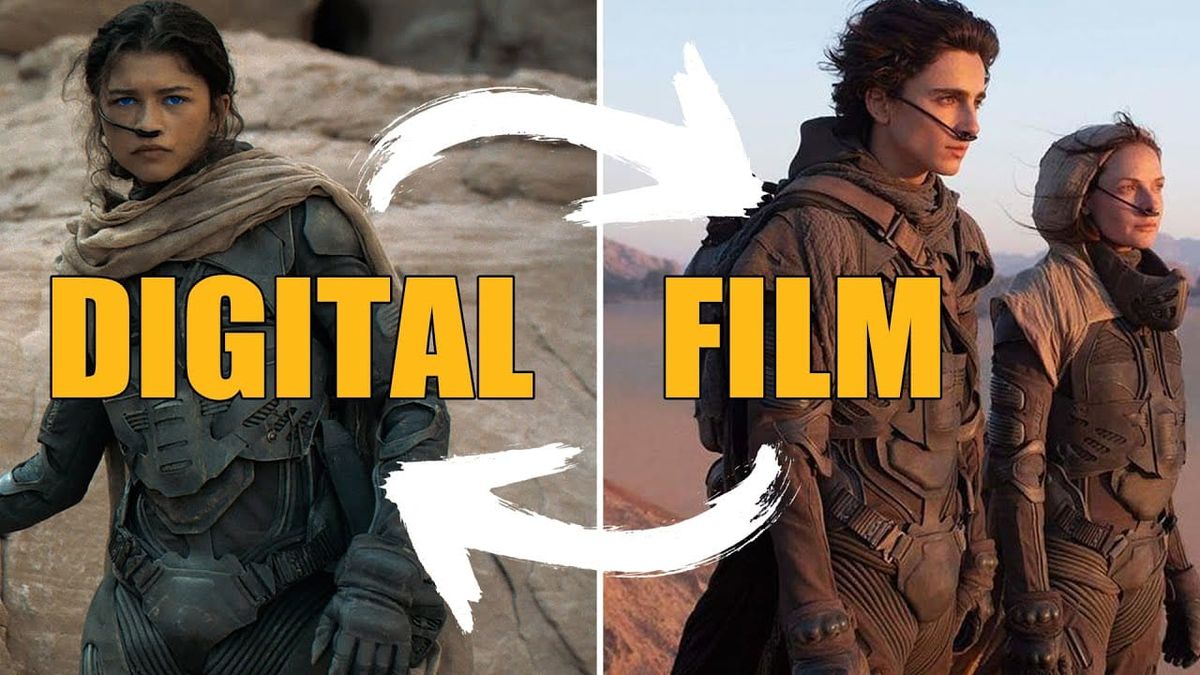
Some of the most talked-about cinematography in recent years, on films shot entirely on digital cameras, actually owes its texture to a process most audiences have never heard of: the film-out. Here's what it actually is, and why productions still pay real money for something that sounds backwards on its face, turning digital footage into film.
What a Film-Out Actually Is
A film-out, sometimes called digital-to-film recording or the digital-to-film-to-digital (DFD) process, transfers digitally captured or digitally manipulated images onto physical film stock, imbuing the footage with genuine film characteristics: organic grain, texture, and the subtle imperfections that come from light exposing actual photochemical film.
In many cases, that film is then scanned back into a digital file for final delivery and distribution, meaning the image makes a round trip: digital to film to digital again.
The process is different from simply adding a grain overlay or a film-emulation LUT in post. A film-out physically exposes real film stock to the digital image using a specialized film recorder, so the resulting grain, contrast response, and texture come from actual chemistry and optics, not a digital approximation layered on top.
Why Anyone Would Do This on Purpose
It sounds counterintuitive: shoot digitally, specifically for the flexibility and cost savings that come with digital production, then pay to convert it back into film. But the reasoning comes down to a specific quality digital sensors don't naturally produce.
Film grain isn't decorative, it's structural. The silver halide particles that form a film image are the image; there's no image sharper than the grain that constitutes it. That relationship between grain and structure gives film a particular organic quality that digital sensors, built for clean, low-noise capture, don't replicate on their own.
For cinematographers chasing a specific emotional or textural quality, particularly on projects with a nostalgic, tactile, or classically cinematic aesthetic, converting the final digital image back through actual film is one way to genuinely acquire that quality rather than simulate it.
A Real History, Not a New Trend
Film-out isn't a recent invention. It traces back to the emergence of the digital intermediate (DI) process in the late 1990s, when digital compositing for visual effects first required scanning film into digital form, manipulating it, and then recording it back out. O Brother, Where Art Thou? (2000) is frequently cited as an early landmark example, using digital scanning and grading before a laser film-out to achieve a specific, otherwise unattainable look.
The process peaked in a different form during the 2000s for theatrical distribution, when film prints were still the standard delivery format for cinemas and digital productions needed a film-out purely to get a projectable print, a practical necessity rather than an aesthetic choice.
As digital projection became the theatrical standard, that specific use case faded. What remained, and has continued into high-end production today, is the aesthetic use case: converting digital footage to film specifically for the visual qualities film provides, independent of how the final product gets distributed.
What It Actually Costs
Film-out is genuinely expensive, and that cost is exactly why it remains rare outside high-budget productions. Industry figures put a full 35mm feature-length film-out, covering recording and printing, at well over $100,000, with 16mm representing a more economical alternative for lower-budget or educational projects, though still a significant cost relative to an all-digital finishing pipeline.
Beyond the film-out itself, related film lab costs add up separately: supervised transfers (converting film back to digital for editing) typically run $200–500 per hour regardless of format, and per-foot processing and scanning costs add further expense on top of the core film-out charge. This is squarely a cost tier associated with major studio productions, not independent or mid-budget filmmaking.
Why It's Reserved for High-Profile Projects
Beyond cost, film-out is a specialized, resource-intensive process with real practical constraints: a limited number of working film recorders and labs capable of doing it, longer turnaround times than a purely digital finishing pipeline, and the need for precise technical oversight throughout, since digital images aren't naturally prepared for film's specific contrast range and exposure latitude. Treating it as a simple format conversion, rather than a process requiring intentional planning from early post-production onward, is a common and costly mistake.
That combination of expense and technical demand is exactly why film-out shows up almost exclusively on high-profile theatrical features and archival masters, rather than as a routine finishing option available to most productions.
The Signal in the Noise
Film-out sits at a genuine intersection of digital and traditional cinema: it lets a production keep every efficiency of a modern digital workflow, precise color grading, VFX integration, flexible editing, while still delivering a final image with real, physically-produced film characteristics rather than a digital approximation of them.
It's not accessible to most filmmakers given the cost, but understanding what it actually is explains a texture quality you've likely noticed in high-end cinematography without knowing what produced it.