What Is MiniMax H3? A Guide to AI Video's Newest Open-Weight Model
MiniMax H3 is an open-weight video model getting a different kind of buzz. Here's what it is, how it works, and how AI video got here.


MiniMax H3 has been generating a specific kind of buzz since its late-July release, different from the usual "new model just dropped" cycle. Here's what it actually is, how it fits into where AI video has been, and why the model itself is only part of the story.
Where AI Video Was Two Years Ago
In mid-2024, AI video meant short, often broken clips. Runway's Gen-3 Alpha, unveiled that June, was considered the most usable option available, producing a handful of seconds of footage with inconsistent physics and frequent visual artifacts. OpenAI had shown Sora demo clips back in February 2024 that stunned people, but Sora itself remained locked behind a small group of testers for the rest of the year. Kling, Pika, and Luma's Dream Machine were racing to ship consumer products, but every tool in the category shared the same limitations: short duration, no audio, and unreliable consistency from one frame to the next.
Where AI Video Was One Year Ago
By mid-2025, the field had split into two tracks. Google's Veo 3 and Runway's Gen-4 launched publicly that summer, pushing quality and control further. Then OpenAI answered on September 30, 2025 with Sora 2, which it called "the GPT-3.5 moment for video." Sora 2's headline feature was synchronized audio, dialogue, sound effects, and ambient noise generated alongside the visuals rather than added in post. That was the real shift: video models stopped being silent.
Sora 2 didn't last as a consumer product. OpenAI shut down the Sora web and app in April 2026, citing compute costs and a pivot toward enterprise tools, with the API following in September 2026. But the audio-native approach it introduced became the standard other labs built toward.
What MiniMax H3 Actually Is
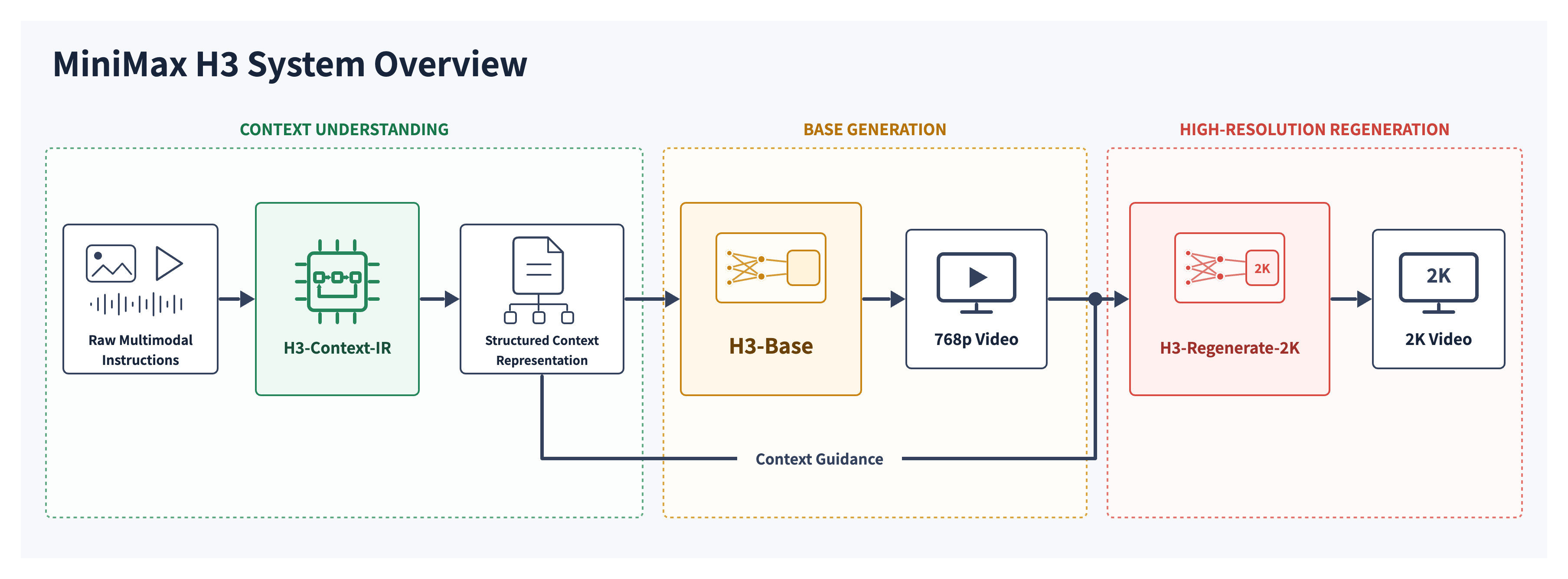
MiniMax released H3 on July 31, 2026, also known by its consumer-facing name Hailuo 3.0. It's built on what MiniMax calls the H3-Omni-Transformer, a 33-billion-parameter dense transformer that processes text, images, video, and audio inside one shared model rather than routing each task to a separate specialized system.
That consolidation is the core idea. Older pipelines needed one model for text-to-video, another for image-to-video, another for editing, another for lipsync, and another for sound design, with each handoff between tools losing information the previous stage had generated. H3 folds all of that into a single set of weights. A single request can carry a character's face from a photo, a camera movement from a reference clip, a line of dialogue from an audio file, and a cutting rhythm from an edited sequence, up to 12 reference files total across images, video, and audio.
Output runs 5 to 15 seconds at up to 2K resolution and 24 fps, with native stereo audio generated in the same pass as the visuals. It also renders legible on-screen text, which puts title cards, signage, and interface elements within reach of a text prompt, something most video models still struggle with.
What "Open Weights" Means Here
MiniMax released H3's weights publicly on Hugging Face under the MiniMax H3 Community License. That's a meaningfully different move than a closed API-only model like Sora 2 or Veo. Open weights mean researchers and developers can download the model, inspect it, run it on their own hardware, and build tools on top of it without needing MiniMax's permission for each use case.
The caveat: "open" doesn't mean "runs on a laptop." A 33-billion-parameter dense model with audio decoding is a workstation-or-cluster proposition. MiniMax documents deployment across four GPUs for full performance, though the community has already produced quantized versions and consumer-GPU workarounds, along with a Mac-native inference engine covered separately below. The full 2K output pipeline still routes through MiniMax's hosted API rather than the open checkpoints.
Two Terms Worth Knowing: fal and LoRA

fal is a company, not a model. Founded in 2021, fal runs cloud infrastructure that lets developers access hundreds of AI image, video, and audio models through one API, without needing to own or rent their own GPUs. Think of it as a hosting layer: fal doesn't build MiniMax H3, but it makes H3 (and many other models) available instantly through a web interface or code, handling the expensive computing work behind the scenes. fal was a day-zero partner for H3's release, meaning creators could run the model on fal's platform the same day MiniMax released it.
LoRA stands for Low-Rank Adaptation, a technique for customizing an AI model without retraining the whole thing from scratch. Training a full video model like H3 from zero would require massive computing resources most people don't have. A LoRA instead trains a small set of additional parameters on top of the existing model, teaching it a specific style, subject, or look using a relatively small dataset. The result is a lightweight file that modifies H3's output toward whatever the LoRA was trained on, whether that's a particular visual aesthetic, a consistent character, or in fal's own demonstration LoRA, more photorealistic human skin, eyes, and motion.
Competitive Context
H3 isn't competing in a vacuum. Google's Veo 3.1, Kling 3.0 Omni, and Seedance 2.0 are all active alternatives as of mid-2026, each with native audio and strong reference-image controls. On Artificial Analysis leaderboards, H3 ranks first in video editing and places second and third in text-to-video and image-to-video respectively, a strong showing but not a clean sweep. Its real differentiator isn't raw quality, it's the combination of open weights and unified multimodal input in one release, something none of the closed competitors currently offer.
The Signal in the Noise
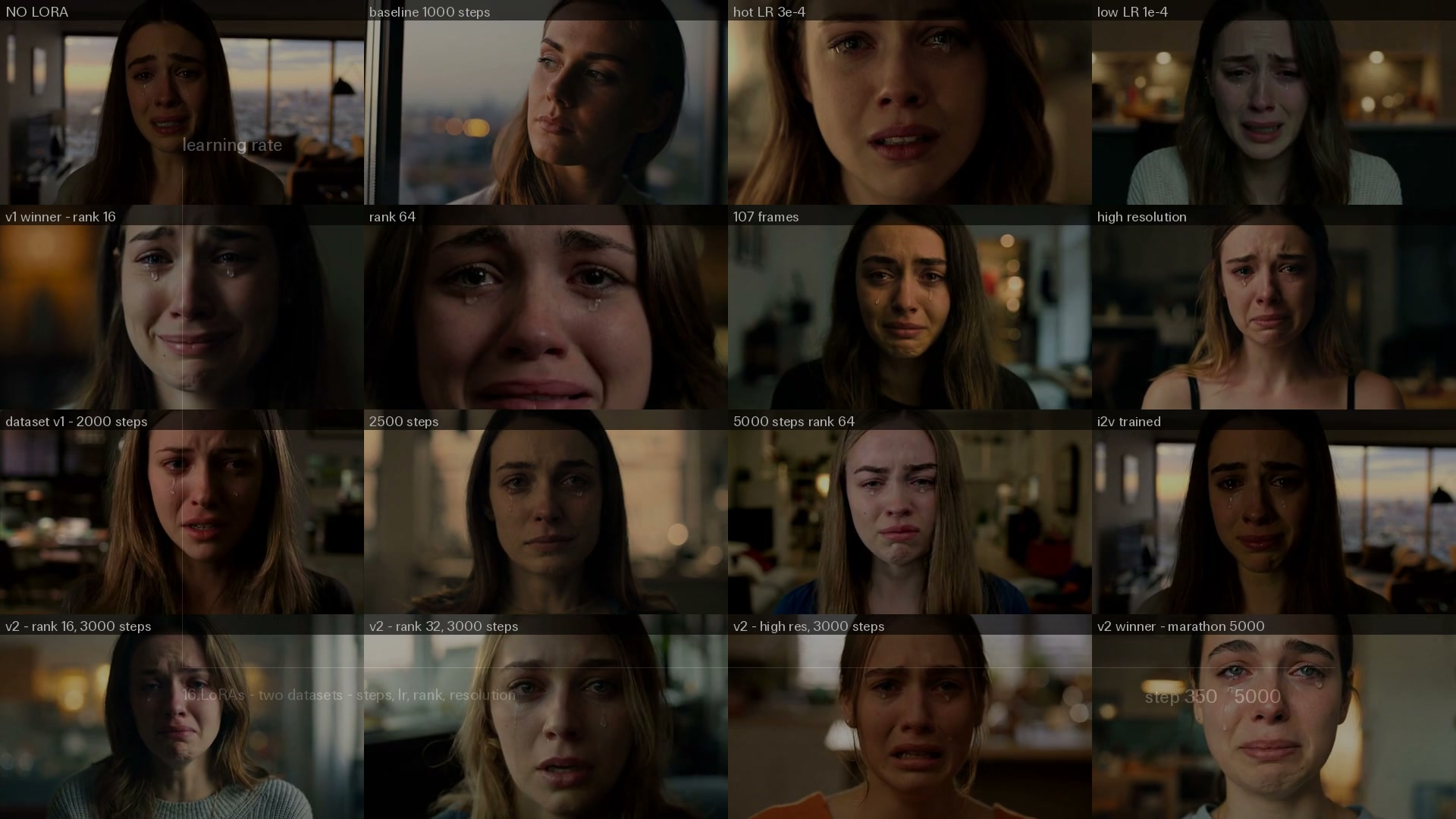
The buzz around H3 isn't really about any single benchmark. It's about what happens after release: a community-built Mac-native inference engine appeared within days, and a LoRA trainer with a working demo model followed shortly after. That's the pattern open weights are supposed to produce, other people extending a model in directions the original company didn't necessarily plan for or prioritize.
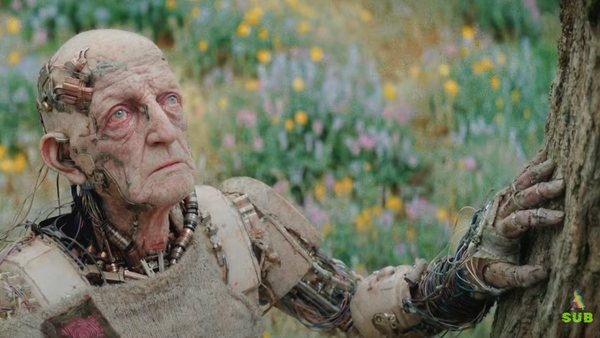
Two years ago, the state of the art was four-second clips with melting faces. One year ago, models learned to talk. This year, one of them opened its weights and let anyone build on top of it. Given how fast each of those shifts happened, whatever wins the "most talked about model" conversation a year from now probably doesn't exist yet.
What would you want to see an open-weight model like this get used for, once more filmmakers start actually building with it instead of just testing it?
Specs & Pricing
- Model: MiniMax H3 (Hailuo 3.0), released July 31, 2026
- Architecture: H3-Omni-Transformer, 33B-parameter dense transformer, MM-RoPE for multimodal token alignment
- Output: 5–15 second clips, up to 2K resolution, 24 fps, native stereo audio
- Inputs: up to 9 images, 3 video clips (2–15 sec each), 3 audio clips, 12 files max per request
- License: MiniMax H3 Community License, open weights via Hugging Face
- Hosted access: available on fal.ai and MiniMax's Open Platform API
- Self-hosting: documented for 4-GPU SGLang deployment; community quantized and Mac-native builds also available