Best Lenses for the Lumix SHX1: Cinema Primes, Zooms and Budget Options for a 6K Full-Frame Sensor
A lens guide for the Lumix SHX1: Panasonic S primes and zooms, L-Mount cine and anamorphic options, and what stabilization, autofocus and crop mean for each.

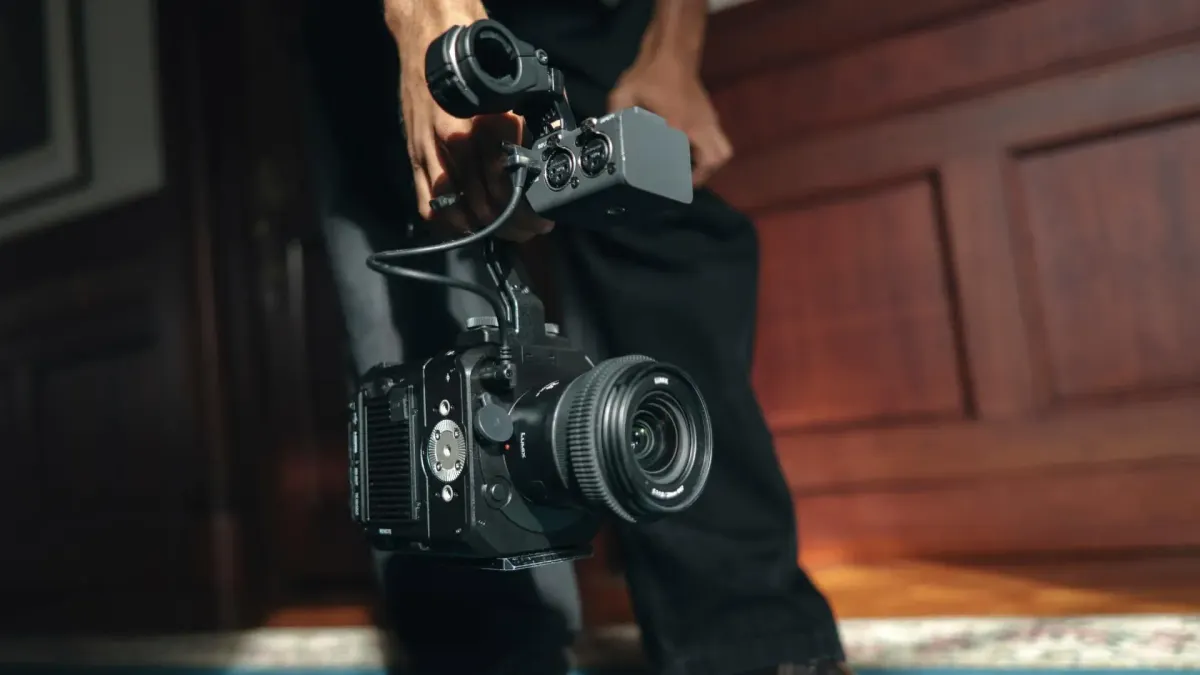
The Lumix SHX1 is a 6K full-frame cinema camera, and the lens you put on it decides a lot about how it handles.
Panasonic’s announcement refers to L-Mount lenses, and retailers list the camera as working with the LUMIX S lens range. That opens up Panasonic’s own glass, Leica and Sigma L-Mount lenses, and a growing list of third-party cine and anamorphic lenses.
The camera is priced at $4,699.99 and ships in stages from December 2026, so lens planning starts before the body arrives.
What the SHX1 Sensor Asks of a Lens
The SHX1 uses a 24.1MP full-frame sensor with an optical low-pass filter, and Open Gate recording uses the full 3:2 sensor area.
Lenses that cover full frame use the whole sensor. APS-C and Super 35 lenses cover a smaller image circle, so expect a crop or vignetting depending on the lens and recording mode.
Blackmagic RAW 6K at 24p in Open Gate carries a slight crop, according to Panasonic. Check your lens coverage against the mode you plan to shoot.
Panasonic’s Own L-Mount Lenses
The LUMIX S lineup is the most straightforward place to start.
The S series f/1.8 primes cover 18mm, 24mm, 35mm, 50mm and 85mm. Wolfcrow’s video lens guide recommends them for linear focus mechanisms, minimal focus breathing and a nine-blade aperture. They are also among the lighter and cheaper options in the system.
For zooms, the S PRO 16-35mm f/4, 24-70mm f/2.8 and 70-200mm f/2.8 O.I.S. cover the standard range. Wolfcrow notes the lineup has no f/2.8 wide zoom.
Leica makes L-Mount zooms in 14-24mm, 24-70mm and 70-200mm f/2.8, plus a 90-280mm f/2.8-4. Wolfcrow finds them good but prefers Panasonic’s zooms for their linear focus motors and lower price.
How Stabilization Changes the Lens Choice

The SHX1 has 5-axis body stabilization, so lenses without optical stabilization still get stabilized footage.
Panasonic says Dual I.S. 2 combines body and lens stabilization at telephoto focal lengths. That favors a stabilized lens like the 70-200mm f/2.8 O.I.S. for handheld long-lens work.
Cropless electronic stabilization is available with wide-angle lenses. Panasonic says active I.S. and E.I.S. work together for walking shots.
Autofocus and Lens Control
Phase Hybrid AF uses 779 focus points. Panasonic says it recognizes eyes, faces and bodies, plus animals, cars, motorcycles, bicycles, trains and aircraft.
Autofocus is a reason to stay with native AF lenses. Manual cine lenses give up that system entirely.
Panasonic is developing a power zoom lens for the SHX1 and remote production. It has no name or date yet.
A firmware update in the first half of 2027 will add direct focus and iris control of L-Mount lenses from a Tilta hand wheel. That works without external lens motors.
Lenses without power zoom support can use the Crop Zoom function through the AU-GRP1 Control Grip.
Cine and Anamorphic Options
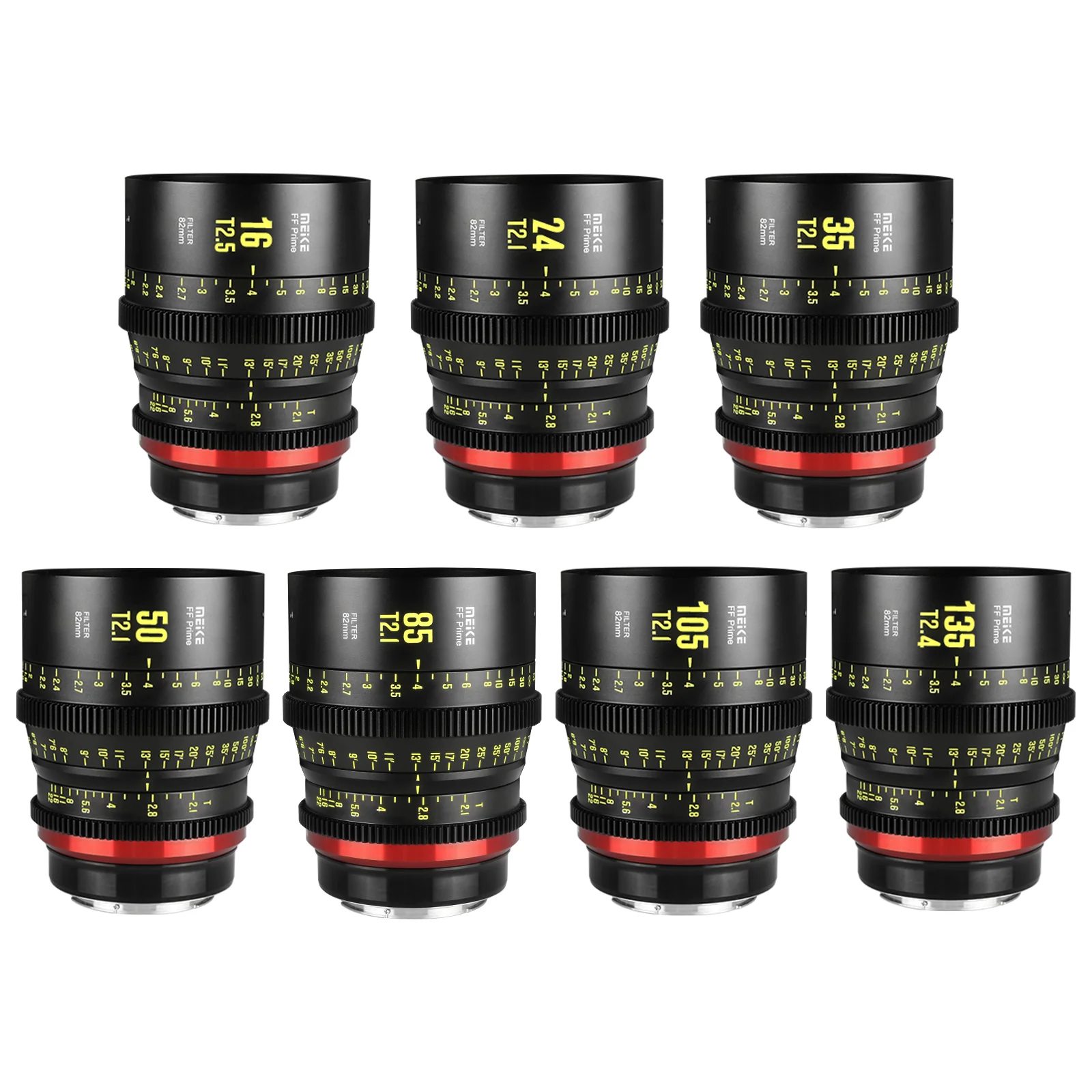
Cine lenses make the most sense for shoots with a focus puller, a matte box and a rig.
Les Deux Pieds Dehors lists full-frame L-Mount cine lenses from several makers. Meike’s FF-Prime Cine runs from 16mm to 135mm, Irix Cine covers 11mm to 45mm, 7Artisans Spectrum T2.0 offers 35mm, 50mm and 85mm, and Laowa has a 12mm Zero-D Cine.
Wolfcrow also points to Sigma’s PL-mount cine primes, which need an adapter, and lists the Sigma 28-45mm T2 cine zoom with autofocus as a lower-budget zoom option.
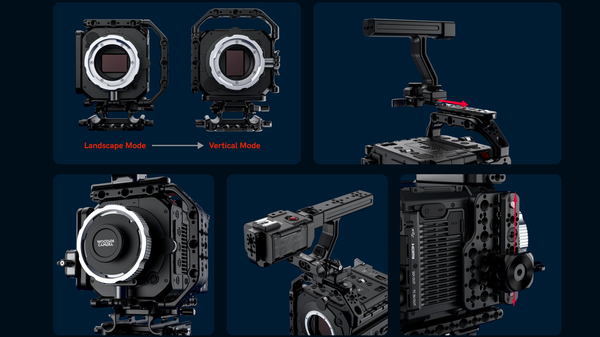
Panasonic says Open Gate recording suits anamorphic lenses. The SHX1 has a vertical desqueeze display for Vertiscope shooting, a stabilization mode with roll correction for anamorphic use, and Phase Hybrid AF that stays active in desqueezed display.
For anamorphic on full frame, the listed L-Mount options include Sirui’s 1.6x full-frame lenses at 50mm, 75mm, 100mm and 150mm, Viltrox’s EPIC 1.33x at 35mm, 50mm and 75mm, and Blazar’s Great Joy 1.8x at 35mm, 50mm and 85mm.
Competitive Context
Lens choice is a main reason to compare the SHX1 with Sony’s FX5. The FX5 uses E-mount, which has a large third-party lens catalog. BRC’s Lumix SHX1 vs Sony FX5 comparison covers RAW, dynamic range, ND and price.
The SHX1 has no internal ND filter, so lens filter size and matte box choice matter. BRC’s guide to Lumix SHX1 ND options covers drop-in ND, matte boxes and the Tilta Mirage Variable ND.
For the full spec breakdown, see BRC’s Lumix SHX1 announcement coverage.
The Signal in the Noise
Panasonic’s announcement names no lenses for the SHX1. The picks above come from L-Mount lens guides and Panasonic’s existing S lineup, not from SHX1 testing.
Check lens coverage, focus behavior and stabilization on the camera once review units are out. Behavior with third-party lenses may differ from what is described for Panasonic’s own.
For most buyers, the practical starting point is one native zoom and one fast prime, then cine or anamorphic lenses once the rig takes shape. Current prices for any lens are on B&H and the maker’s website.
Would you shoot the SHX1 with native L-Mount lenses, or adapt cine glass you already own?