Panasonic Announces the Lumix SHX1: 6K Full Frame, 4K 120p, ARRI LogC3 and 32-Bit Float Audio
Panasonic’s Lumix SHX1 is a 6K full-frame L-Mount box camera with internal ProRes RAW, 4K 120p and ARRI LogC3, at $4,699.99. It has no internal ND.

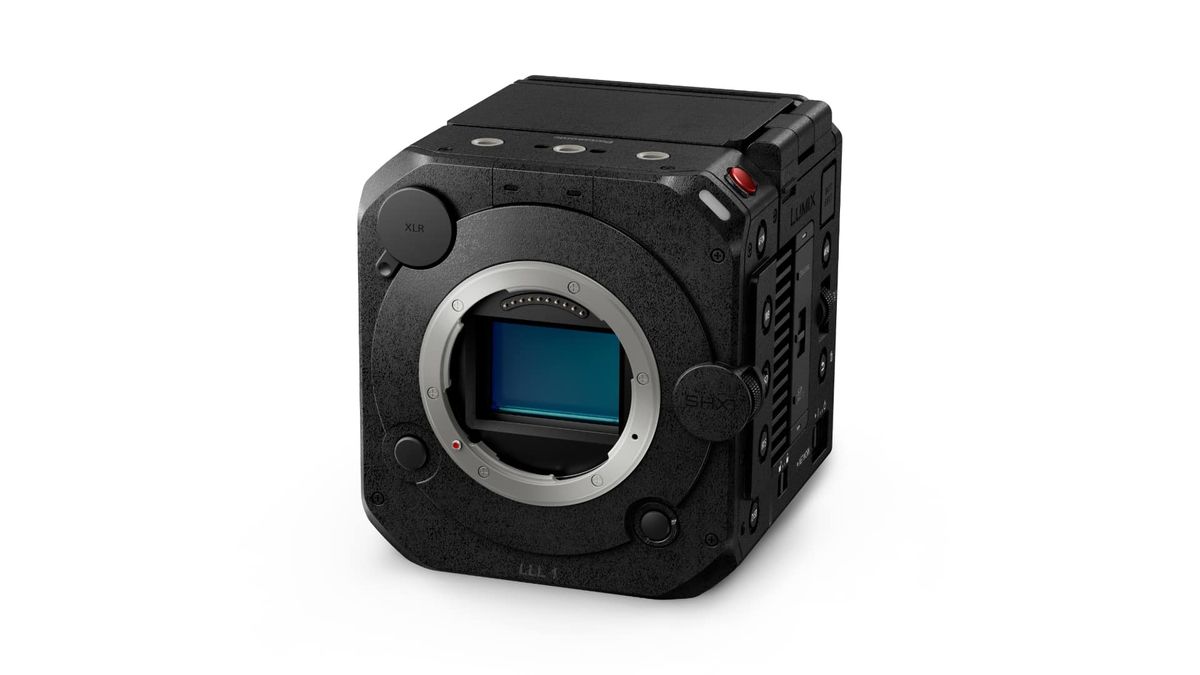
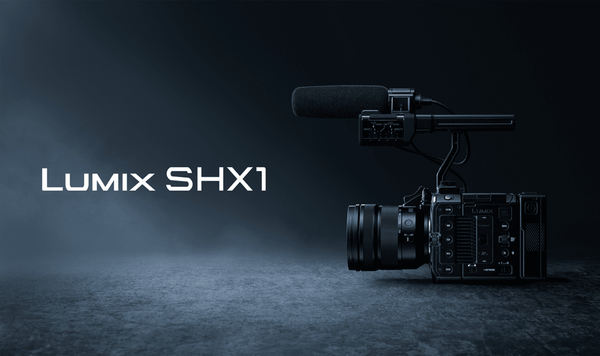
Panasonic announced the Lumix SHX1 on Nov 17 in Tokyo, a box-style L-Mount camera built around a 6K full-frame partially stacked sensor.
Panasonic bills it as the first compact cinema camera in Lumix history. It lists at $4,699.99 for the body and $5,499.99 for a kit with the XLR handle unit and control grip.
The camera records ProRes RAW internally to CFexpress Type B and Blackmagic RAW to an external SSD. It also has 4K 120p with no time limit, ARRI LogC3 preinstalled next to V-Log, and 32-bit float audio.
It has no internal ND filter. Panasonic’s release says it ships in stages from December 2026, and CineD reports customer delivery is expected in January 2027.
Where It Fits in Panasonic’s Lineup
Panasonic says it integrated its professional AV and consumer imaging businesses in 2024, and describes the SHX1 as bringing expertise from both into one compact cinema camera.
Newsshooter reports the sensor is the same one used in the Lumix S1 II, with an optical low-pass filter added. BRC covered Panasonic’s finances in Panasonic’s record profit and Lumix future in August.
Sensor and Dynamic Range
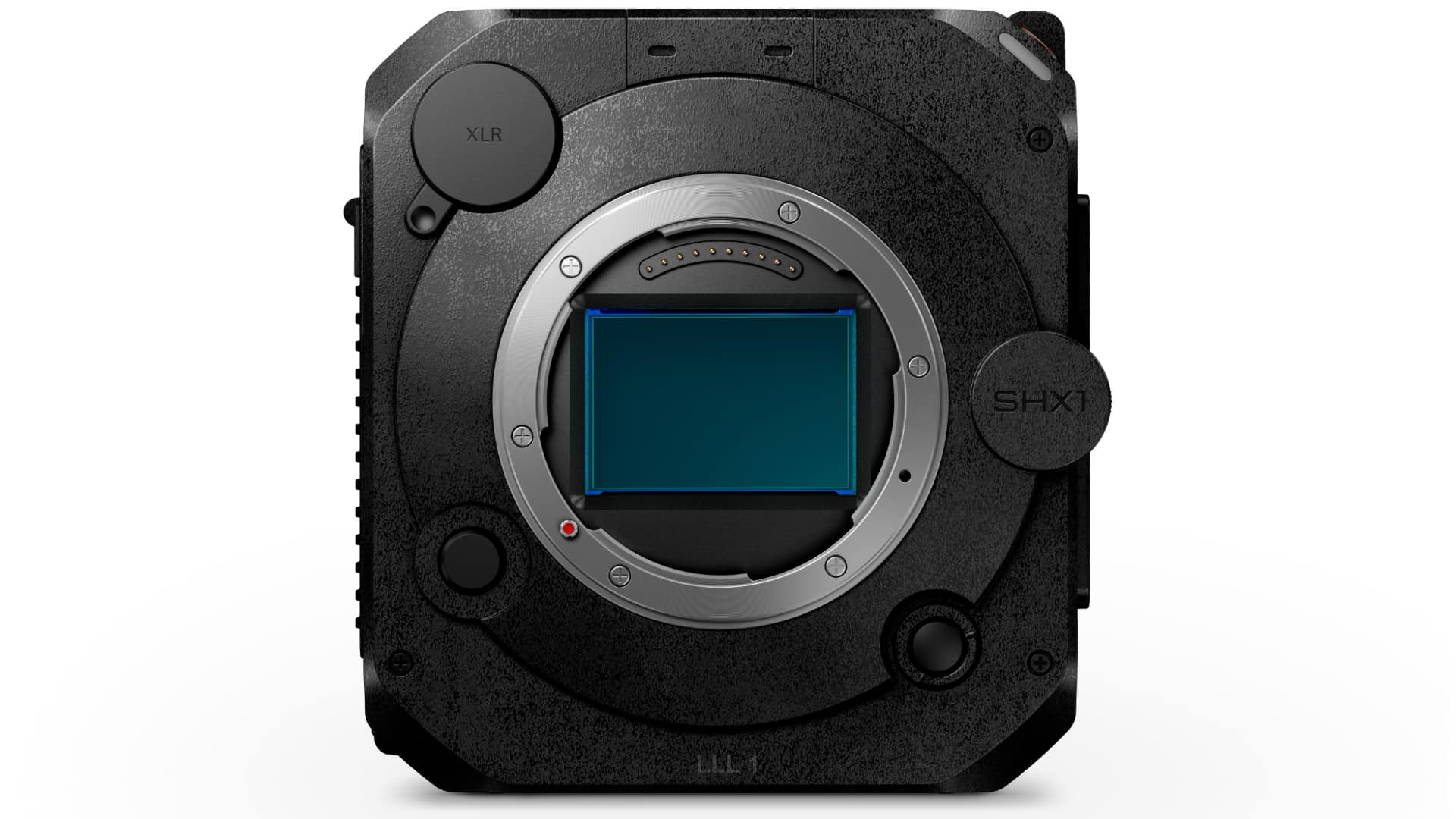
The SHX1 uses a 6K full-frame partially stacked CMOS sensor of about 24.1MP, with Dual Native ISO and the optical low-pass filter.
Panasonic claims 15 stops of dynamic range in V-Log with Dynamic Range Boost on, and 14 or more stops with it off.
In Newsshooter’s first look, the reviewer found the trade-offs outweighed the benefits and usually kept the boost off. He reports it increases rolling shutter and disables many formats and frame rates. BRC’s rolling shutter vs global shutter explainer covers the background.
In CineD Lab testing, the SHX1 measured 14.3 stops of dynamic range against 14.4 for the Sony FX5 at SNR=1.
ARRI LogC3 is included at no extra cost, unlike on other Lumix models. Newsshooter reports highlights clip before reaching the end of the LogC3 curve, and LogC3 is not available in ProRes RAW.
Resolution and Frame Rates
The SHX1 records 6K at 30p and 5.1K at 60p in 4:2:0 10-bit, and 3.8K at 48p in 4:2:2 10-bit.
It records 4K at 120p with no time limit, within the guaranteed operating temperature range. CineD attributes this to the metal exterior and a large fan.
The camera outputs 12G-SDI up to 4K 60p.
Open Gate recording is available in Blackmagic RAW at 6K 24p with a slight crop, at 6K 30p and at 5.1K 60p in 3:2. BRC’s open gate explainer covers the format.
A vertical anamorphic desqueeze display supports what Panasonic calls Vertiscope framing.
RAW Recording: ProRes RAW and Blackmagic RAW
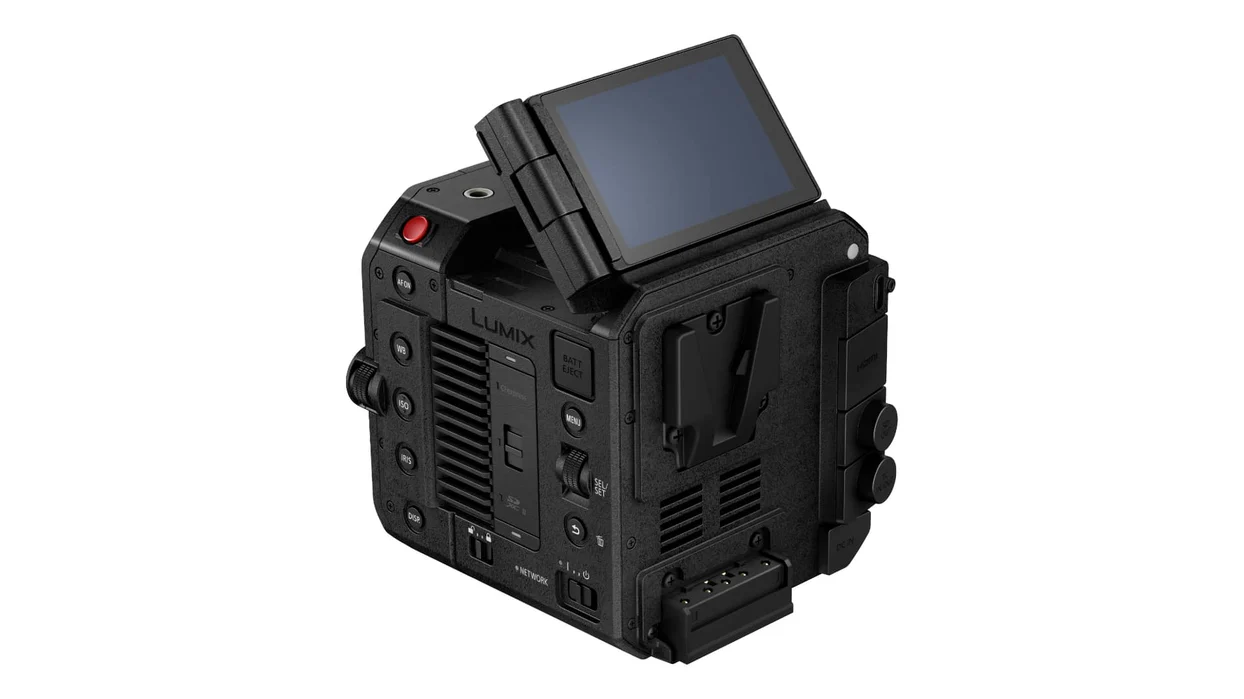
The SHX1 records Apple ProRes RAW HQ and ProRes RAW internally to CFexpress Type B, with no external recorder.
Blackmagic RAW records only to an external USB-C SSD of up to 2TB. Panasonic recommends tested drives, and Blackmagic color science is selectable.
Both Newsshooter and CineD question the SSD requirement, since the onboard media is fast enough. CineD also notes there is no 32-bit float audio when recording Blackmagic RAW to an SSD.
Recording to an external SSD blocks simultaneous recording to a card, except that a proxy file can go to an SD card.
No Internal ND
The SHX1 has no built-in ND filter. Panasonic chose in-body stabilization over an internal ND, according to CineD.
Newsshooter calls it the biggest complaint, noting the Sony FX6, Canon C70 and Canon C80 all have internal ND.
Options include a drop-in filter adapter, a matte box or screw-on variable ND. A firmware update planned for the first half of 2027 adds control of the Tilta Mirage Variable ND from the Control Grip and Panasonic controllers.
Stabilization and Autofocus

The camera has a 5-axis body image stabilizer that works with lenses that lack optical stabilization.
Dual I.S. 2 combines camera and lens stabilization at telephoto focal lengths. Active I.S. and electronic stabilization are also included, with a cropless mode for wide-angle lenses and an anamorphic mode with roll correction.
Newsshooter found the stabilization smooths handheld shake well, even with longer lenses, but tends to float, so shots can drift slightly.
Autofocus is Phase Hybrid AF with 779 focus points and AI-based eye, face and body detection and tracking. Newsshooter expects performance similar to the S1 II but did not test it in detail.
Audio and the XLR Handle Unit
The SHX1 records 32-bit float audio internally through the 3.5mm mic input. BRC’s piece on 32-bit float audio and gain covers how it works.
The optional XLR Handle Unit AU-XHU1 adds 4-channel 32-bit float recording and 96kHz/24-bit high-resolution audio.
Newsshooter criticized the lack of direct switches and on-screen display for the XLR input settings.
Body, Media and Connectivity
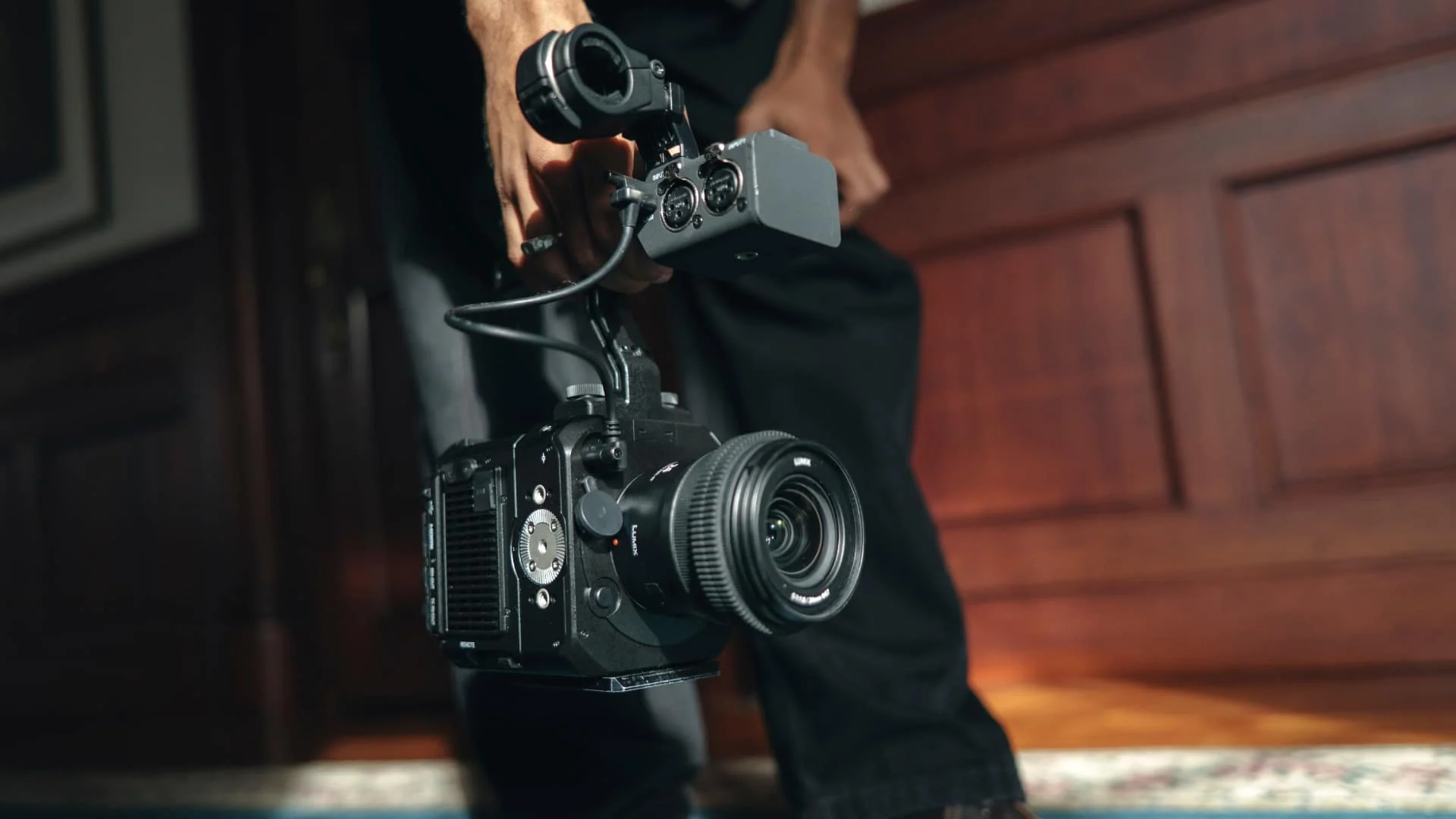
The body weighs about 984g (2.17 lb), without the body cap, and can be rigged horizontally or vertically.
It has dual slots for CFexpress Type B and SD cards, with a lock lever on the card door. Newsshooter reports a 4TB CFexpress card was rejected on early firmware.
A top-mounted tilt touch monitor measures 3.0 inches at about 1.84 million dots. Newsshooter found it reflective and small for manual focus, and suggests most users will want an external monitor.
Outputs include 12G-SDI and HDMI Type A, with TC IN/OUT on BNC and Bluetooth timecode sync. Panasonic’s stated latency is 2 to 4 frames depending on connection and audio settings. In Newsshooter’s testing, SDI latency was noticeably worse than HDMI in one setup.
Micro V-mount battery support is a first for Lumix, and USB-C power delivery allows hot-swapping.
The exposure tools are waveform, vectorscope, spot luminance meter, zebra, histogram and false color. View Assist applies LUTs to the displayed image, including over HDMI.
Accessories, Cages and the Firmware Roadmap
The Control Grip AU-GRP1 adds right-hand controls, a power zoom rocker and an ARRI-standard rosette mount.
Newsshooter tested a SmallRig cage, which offers many mounting points, but its right-side piece blocks the grip’s rosette. It also found a Wooden Camera cage system with ARCA and NATO mounts for quick switching between horizontal and vertical setups. Wooden Camera pre-orders start in December, with pricing not announced.
The Live Production Unit AU-LPU1, planned for the first half of 2027, adds IP control, Genlock IN and PoE++ LAN for PTZ use.
The same firmware update adds remote focus and iris control of L-Mount lenses from a Tilta hand wheel. A power zoom lens is in development.
LUMIX Flow 1.8.0 and LUMIX Lab 3.2.0 both add SHX1 support.
What Early Hands-On Coverage Found
Newsshooter’s first look used pre-production firmware, and the reviewer said Panasonic was still gathering feedback.
Footage looked similar to the Lumix S1 II. In a comparison against an ARRI Amira, the SHX1 leaned magenta and was more saturated. It could be matched with tint adjustments and minor grading, but was harder to match in difficult lighting.
Underexposed ProRes footage in LogC3 gets noisy when lifted, according to the same review.
CineD’s reviewer called it a very fine product that could work as an A camera for Lumix shooters or a B camera for ARRI productions. He listed flexibility across cinema, broadcast and run-and-gun setups among its strengths, and the missing internal ND as a weakness.
Competitive Context
Panasonic is entering a price range where BRC has already compared several cinema bodies.
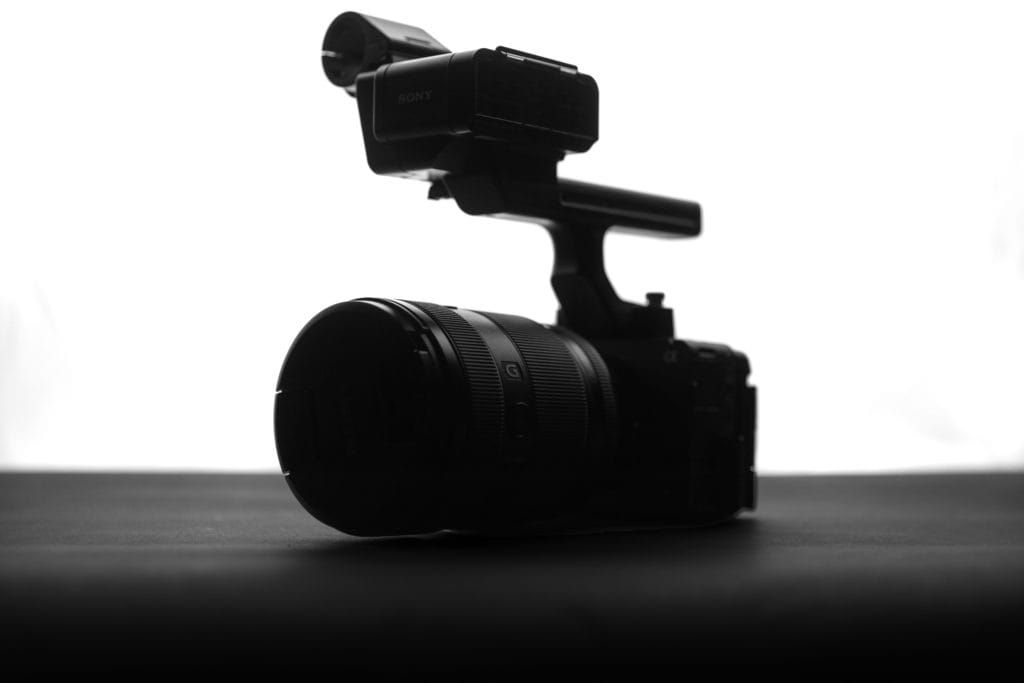
Sony FX5. CineD says the two cost about the same. It notes the FX5 has a detachable viewfinder, while it describes the SHX1 as more flexible. In CineD Lab testing, dynamic range was close, at 14.3 stops for the SHX1 and 14.4 for the FX5. BRC’s Sony FX5 complete buying guide covers the camera, and FX5 vs Panasonic S1 II compares it with the camera the SHX1 is based on.
Canon C80. Newsshooter lists the C80 among cameras with internal ND, which the SHX1 lacks. BRC’s Canon EOS C80 full-frame cinema value covers it, and Canon’s December firmware update is covered in a separate article.
Blackmagic Pyxis 6K. The Pyxis is another box-style cinema body. BRC’s Sony FX5 vs Blackmagic Pyxis 6K and Canon C80 vs Blackmagic Pyxis 6K comparisons show how it sits against the FX5 and C80.
Newsshooter says the SHX1 arrives late to the market, but is a reasonable option mainly for existing Lumix users and ARRI B-camera owners.
The Signal in the Noise
The camera’s pitch is the recording stack: internal ProRes RAW, external Blackmagic RAW, ARRI LogC3, 4K 120p and 32-bit float audio in a body under 1 kg.
The trade-offs are the missing internal ND, the external SSD requirement for Blackmagic RAW and a small, reflective screen. Early reviews also flagged dense menus and many format and frame rate caveats.
Most hands-on findings come from pre-production firmware, so autofocus, latency and card compatibility may change before shipping.
The 15-stop dynamic range figure is Panasonic’s claim. CineD Lab measured 14.3 stops, and the Newsshooter reviewer usually left the boost off.
Does a box-style body fit how you shoot, or do you want a viewfinder and internal ND on a camera in this price range?
Specs & Pricing
- Sensor: 6K full-frame partially stacked CMOS, about 24.1MP, Dual Native ISO, optical low-pass filter
- Mount: L-Mount
- Dynamic range: 15 stops in V-Log with Dynamic Range Boost on, 14+ with it off, per Panasonic
- Recording: 6K 30p, 5.1K 60p (4:2:0 10-bit), 3.8K 48p (4:2:2 10-bit), 4K 120p with no time limit
- RAW: ProRes RAW HQ and ProRes RAW internal to CFexpress Type B, Blackmagic RAW to external SSD
- ND filter: none
- Stabilization: 5-axis body I.S., Dual I.S. 2, Active I.S., electronic stabilization
- Autofocus: Phase Hybrid AF, 779 points
- Audio: 32-bit float, 3.5mm input; 4-channel with XLR Handle Unit AU-XHU1
- Power: Micro V-mount, USB-C power delivery
- Weight: about 984g (2.17 lb), body only
- Price: $4,699.99 body only, $5,499.99 kit with AU-XHU1 and AU-GRP1
- Availability: staged shipping from December 2026, with customer delivery expected in January 2027 per CineD