From "Dunkirk" to "The Odyssey": How Editor Jennifer Lame Changed the DNA of Christopher Nolan's Cinema
Lee Smith cut Christopher Nolan's films from "Batman Begins" through "Dunkirk." Then he left for "1917," and Jennifer Lame came in. Here's what changed — and why it matters for understanding everything Nolan has made since.

Christopher Nolan has made thirteen feature films. For the first seven of those — from "Following" in 1998 through "Dunkirk" in 2017 — the same editor shaped every cut, every transition, and every structural decision alongside him. Then that editor left for another project, and everything changed.
The story of how Jennifer Lame became Christopher Nolan's editor is partly logistical: Lee Smith, who cut Nolan's films from "Batman Begins" through "Dunkirk," was hired to edit Sam Mendes' World War I epic "1917." The timing created an opening. But what Lame brought to that opening — and what it did to Nolan's filmmaking — is more interesting than the circumstance that created it.
Who Lee Smith was and what he built
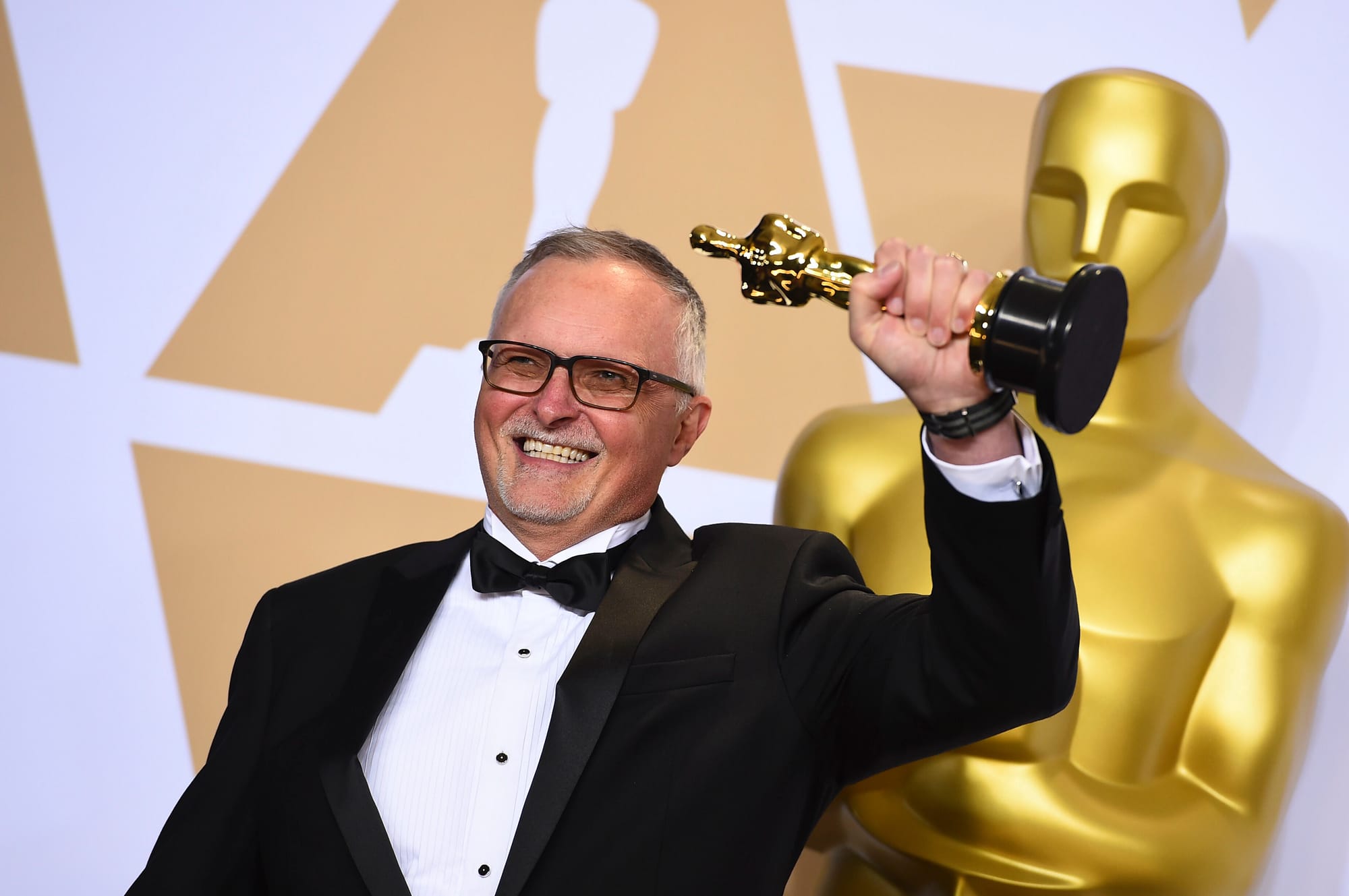
Lee Smith's editing style across his Nolan collaborations was characterized by a specific kind of control. The Dark Knight trilogy required managing enormous amounts of footage across complex action sequences, intercutting multiple storylines with a structural precision that kept audiences oriented in films that were deliberately dense. "Inception" required building and maintaining four simultaneous dream layers without losing the audience's sense of spatial and temporal position. "Interstellar" required intercutting between timescales — minutes on one planet equaling years on Earth — while preserving emotional coherence.
Smith won his own Academy Award for "Dunkirk" in 2018 — Best Film Editing — and the film represents the fullest expression of his approach with Nolan: a war film structured not chronologically but by timescale (one week for soldiers on the beach, one day for the civilian boats, one hour for the Spitfire pilots), edited with a precision that made the convergence of those three threads feel inevitable rather than confusing.
"Dunkirk" is a film about compression. The editing is the compression.
The transition and what it meant
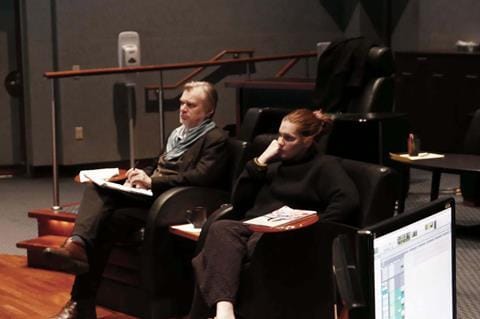
When Smith left for "1917," Nolan was preparing "Tenet" — his most structurally complex film to date, involving time running simultaneously forward and backward in the same frame. He brought in Jennifer Lame, whose credits at that point included work with Noah Baumbach ("Marriage Story"), Ari Aster ("Hereditary"), and Kenneth Lonergan ("Manchester by the Sea") — an indie film background that had nothing obviously in common with the scale of what Nolan was building.
"Tenet" received a mixed response, with some of the criticism landing specifically on the editing — the film's sound mix made dialogue famously difficult to follow, and the pacing of the "inversion" sequences generated debate about whether the complexity was serving the story or obscuring it. On Reddit's r/ChristopherNolan, some viewers attributed the dense, at times impenetrable quality of "Tenet" specifically to the editorial transition — contrasting it unfavorably with the clarity Smith brought to equally complex material on "Inception."
That debate became significantly more complicated three years later.
What "Oppenheimer" proved
Jennifer Lame's work on "Oppenheimer" is one of the most studied pieces of editing in recent Hollywood history, and the Academy's recognition of it with the Oscar for Best Film Editing at the 96th Academy Awards reflects something real about what she accomplished.
"Oppenheimer" runs three hours and tells a story across three distinct timelines — the development of the Trinity test, Oppenheimer's security hearing in 1954, and the confirmation hearings for Lewis Strauss in 1959. Nolan shot the two Oppenheimer timelines in different formats: color for Oppenheimer's subjective first-person experience, black-and-white for the more objective Strauss timeline. Lame's job was to cut between these timelines, these formats, and these vastly different dramatic registers — the urgency of Los Alamos, the claustrophobia of a security inquisition, the political maneuvering of a Senate confirmation — while building toward a third act that required all three to converge simultaneously.
What "Oppenheimer" demonstrates about Lame's specific skill is a facility with psychological time rather than structural time. Smith's great achievement was managing how audiences understand where they are in a story. Lame's great achievement in "Oppenheimer" is managing how audiences feel inside a moment — the escalation of the Trinity sequence, the suffocating intimacy of the hearing room, the way quick cuts in the party scene turn celebration into something approaching paranoia. The editing isn't primarily organizing information; it's creating a subjective experience of being inside Oppenheimer's consciousness.
Nolan's statement after the win was specific: "I've been so lucky to work with Jennifer. She is the most gifted film editor I've worked with and I'm incredibly proud of what we achieved together on this film."
The analog workflow that connects everything
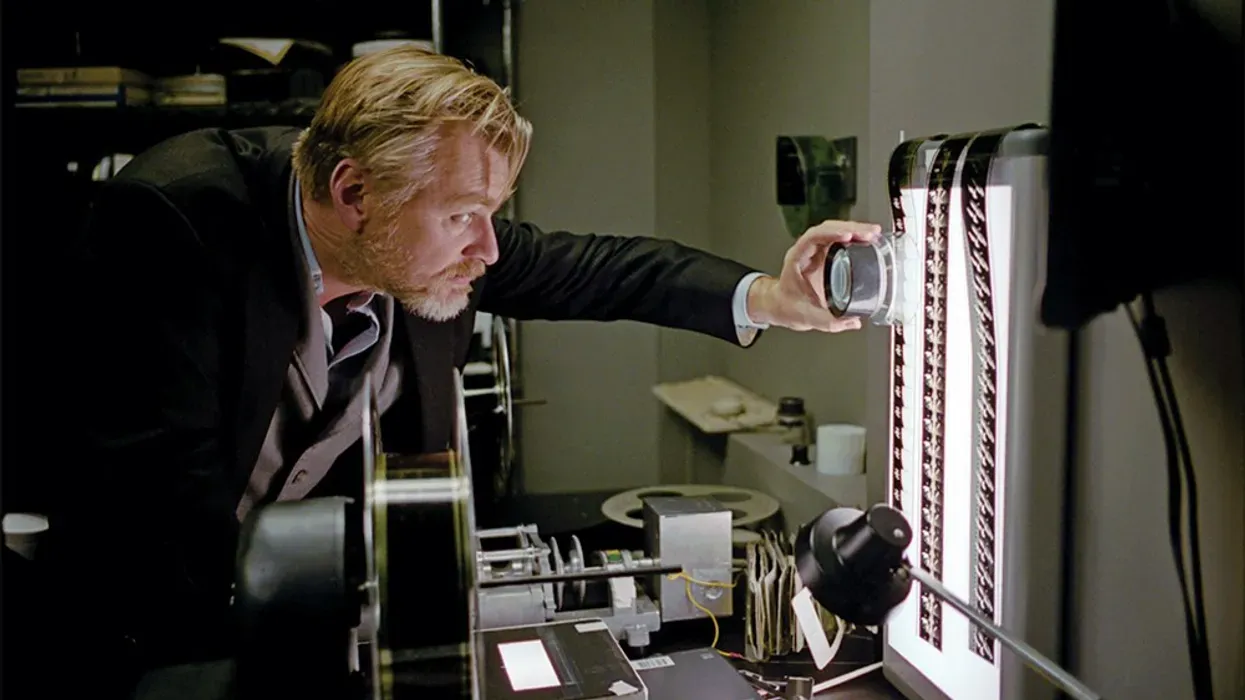
One detail worth understanding about Nolan's editing process, regardless of who the editor is: even with a digital edit, Nolan's team physically splices the original IMAX filmstrips together for any project shot on film. "The Odyssey," which we covered when it opened, was shot entirely on IMAX 70mm — the first feature ever to do so. That means Lame's work on the film involves an analog dimension that almost no other working editor encounters: the actual physical splice of 70mm film alongside the digital assembly, with the IMAX negative itself being handled in a process that hasn't changed in its fundamentals since the format was introduced.
That's not a romantic affectation. For Nolan, the physical splice is part of understanding how a cut actually works — the analog and digital processes informing each other in a way that purely digital editing doesn't allow.
What "The Odyssey" represents for Lame
"The Odyssey," which opened in theaters this week, is Lame's third collaboration with Nolan and arguably her most demanding. The film's story — Homer's Odyssey, told in large-format film, at the scale of a $250 million studio production — requires the same kind of mythological scope management that "Oppenheimer" required for historical scope. Multiple story threads across different islands and years, a cast that includes Matt Damon, Tom Holland, Zendaya, Anne Hathaway, Robert Pattinson, and Charlize Theron, and IMAX 70mm material that presents specific editorial challenges around aspect ratio, pacing, and the physical weight of the frame.
Reviews are still coming in, but the early consensus positions "The Odyssey" as a significant achievement — which means Lame's contribution to it will be scrutinized carefully as the awards conversation develops. She won the Oscar for "Oppenheimer" on her first nomination. A second nomination for "The Odyssey" would put her in rare company.
The deeper point about editor-director relationships
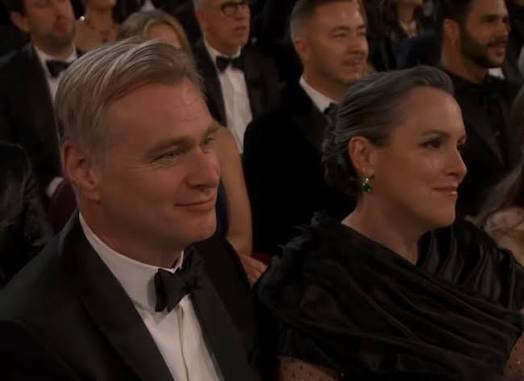
The Lee Smith–Jennifer Lame transition in Nolan's filmography is worth understanding as more than a staffing change. Long-term editor-director relationships are among the most creatively consequential in cinema — Thelma Schoonmaker and Martin Scorsese, Joi McMillon and Barry Jenkins, Pietro Scalia and Ridley Scott. The editor is the person who sits with the director's footage longer than anyone else, who understands the film the director intended and the film that actually got shot, and who shapes the difference between those two things into something an audience can experience.
What Smith gave Nolan was structural mastery — the ability to manage enormously complex narrative architecture with clarity and control. What Lame has given him is something different: a way into the emotional and psychological interior of the material, a kind of editing that trusts the audience to feel their way through complexity rather than always being guided through it.
Whether "Tenet" achieved that is genuinely debatable. Whether "Oppenheimer" did is not.