Runway Gen-4.5 vs Kling 3.0: Which One Should Filmmakers Actually Be Using?
Runway Gen-4.5 wins on control and character consistency. Kling 3.0 wins on realism, volume, and price. Here's exactly when to use each — and why the answer for most filmmakers is probably both.


The honest answer is probably both — but knowing which one to reach for on a given project makes a real difference in output quality, credit spend, and how much time you lose to post-production cleanup. Here's where each model actually wins, where it falls short, and how to think about using them together.
Where they're actually different
Runway Gen-4.5 and Kling 3.0 are often talked about as direct competitors, and on paper they look similar: both generate high-quality video from text or image prompts, both handle complex scenes, both cost roughly the same at comparable subscription tiers. The difference becomes clear when you look at what each one does best.
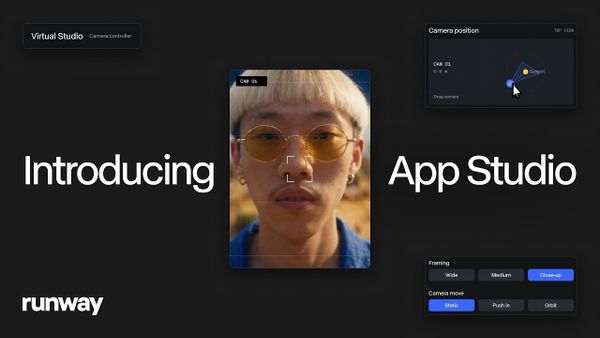
Runway Gen-4.5 is a control tool. Motion Brush, Camera Director, frame-level editing via Aleph, character consistency through reference images — the platform is built for filmmakers and production teams who need to direct what happens in a clip rather than just describe it and hope. The benchmark position backs this up: Gen-4.5 held the top spot on the Video Arena leaderboard in early 2026, scoring highest on motion quality, instruction adherence, and visual detail. The tradeoff is a 16-second clip ceiling — the shortest of the major platforms — and no native audio generation. Every Runway output is silent until you add audio in a separate step.
Kling 3.0, built by Chinese company Kuaishou, is a realism and volume tool. It leads on natural motion — cloth, hair, water, human movement — in a way that Runway doesn't match at the equivalent price point. Native audio generation in five languages, 15-second clips per generation (longer than Runway's 16-second ceiling, with a multi-shot storyboard mode that chains up to six shots together), and a per-clip cost around $0.84 for 10 seconds with audio make it the better choice for high-volume content and any shot where natural physical motion is the priority. The benchmark position is real too: Kling 3.0 holds a #1 overall ELO score of 1,243.
The specific cases where each one wins
Reach for Runway Gen-4.5 when:
- You need character consistency across multiple clips — faces, clothing, and body type maintained shot to shot
- Camera movement needs to be precise — specific pans, pushes, tracking moves
- You're integrating generated clips into an existing editing workflow (Runway's suite of tools is designed for this)
- You're doing VFX pre-vis or testing a complex scene before committing to expensive production
- You need to edit the output — Aleph's frame-level editing and inpainting keep refinement inside the platform
Reach for Kling 3.0 when:
- Natural, believable human motion is the priority — walking, gestures, fabric movement
- You need native audio alongside the clip without a separate step
- You're generating at volume for social content, product shots, or rapid iteration
- Budget matters — at ~$0.84 per 10-second clip with audio, Kling is meaningfully cheaper per clip than Runway at comparable tiers
- You need longer sequences — the multi-shot storyboard mode chains clips with subject consistency in a way that's more developed than Runway's equivalent
The one where Runway clearly wins
Character consistency is the capability gap that matters most for narrative work. Maintaining a specific face, body type, and outfit across multiple generated clips — across different scenes, lighting conditions, and camera angles — is something Runway has invested in specifically and Kling hasn't matched at the same level. If you're building anything with recurring characters rather than isolated one-off shots, this is the deciding factor.
The one where Kling clearly wins
Raw motion realism. A person walking, turning their head, a piece of fabric catching a breeze — Kling's physics feel more believable in motion-heavy shots. Runway gives you a cleaner frame. Kling gives you a more convincing one. For shots where the camera is watching something move, Kling tends to hold up better under scrutiny.
The practical workflow most professionals use
The emerging consensus from production teams using both: use Runway for hero shots and character-driven sequences where control and consistency matter, use Kling for high-volume B-roll and natural motion shots where realism matters more than direction. They're not interchangeable tools — they solve different problems — and the subscription cost of running both simultaneously is lower than most people assume given that Runway's Standard plan starts at $12/month and Kling's starts at $6.99.
Competitive Context
Neither model is unchallenged. Veo 3.1 is the stronger option when native audio plus cinematic quality is the priority — though US-only access limits its availability. Seedance 2.0 currently leads the Artificial Analysis benchmark but remains primarily accessible through ByteDance's Dreamina app rather than a professional API. For teams building on a Western platform with full professional tooling, Runway and Kling remain the most practical combination.
The Signal in the Noise
The question "Runway or Kling?" is increasingly the wrong frame. The more useful question is "which of these tools solves the specific problem this shot has?" — and the answer is usually different for every project. Building familiarity with both, and developing a sense of which one to reach for first based on what a shot needs, is the actual skill that matters as AI video becomes a standard part of production workflows.