What Is VistaVision? The 1950s Film Format Making a Comeback
VistaVision runs 35mm film sideways to roughly double the image size. Here’s how the 1950s format works, why it disappeared and why films like The Brutalist and Digger brought it back.

VistaVision is a 35mm film format that Paramount introduced in 1954, and after decades of near-retirement, it’s back in a big way. The Brutalist, One Battle After Another, Bugonia and Alejandro G. Iñárritu’s Digger were all shot in it, and more productions are lining up.
Here’s what VistaVision is, how it works, why it disappeared and why filmmakers are bringing it back.
How VistaVision Works
Standard 35mm motion picture film runs vertically through the camera, with each frame spanning four perforations. VistaVision turns the film sideways, running it horizontally so each frame spans eight perforations.
That roughly doubles the size of the negative. The result is a frame close to the size of a 35mm still photograph, with a native aspect ratio of about 1.5:1, which can be cropped to wider ratios for release.
A larger negative captures more detail and finer grain, and it produces the shallower depth of field and wider field of view associated with large-format images. That’s the same quality digital filmmakers chase today with large-format sensors.
Why It Was Created
Paramount developed VistaVision in the 1950s as studios competed with television for audiences. Widescreen formats were a way to offer something viewers couldn’t get at home.
Paramount’s goal was “to show them something that they couldn’t get from their own couch at home,” Paramount restoration and preservation director Andrea Kalas Barker told NPR. The first VistaVision release was White Christmas in 1954, and Alfred Hitchcock later used it for films including Vertigo and North by Northwest.
Why It Disappeared
VistaVision faded within about a decade. Improved film stocks with finer grain made standard 35mm sharp enough for most productions, and anamorphic widescreen systems offered a wide image without VistaVision’s cost and complexity.
The format didn’t vanish completely. Its large negative made it valuable for visual effects, and it was used for effects work on films including Star Wars, where the extra resolution helped composites hold up.
Why Filmmakers Are Bringing It Back
The modern revival took off with The Brutalist, shot by Lol Crawley, which put the format in front of awards voters. Paul Thomas Anderson’s One Battle After Another and Yorgos Lanthimos’ Bugonia followed.
Emmanuel Lubezki shot Digger on a rebuilt 1950s Beaumont VistaVision camera, covered in “Nothing Casual in Every Frame”: Inside the VistaVision Cinematography of Digger. According to NPR, Emerald Fennell’s Wuthering Heights and Greta Gerwig’s Narnia also use the format.
The appeal is the same as it was in the 1950s. In an era of streaming, a large-format film image gives theatrical releases a look that’s hard to match at home, especially in IMAX and premium screenings.
The Tradeoffs
VistaVision is demanding. Working cameras are rare, many of them rebuilt from decades-old mechanisms, and they’re loud enough to need soundproofing for dialogue scenes.
The format also uses twice as much film per second as standard 35mm, which raises stock and processing costs and means shorter magazine run times. It needs a lot of light, especially for interiors, and it depends on a capable film lab.
VistaVision’s Digital Legacy
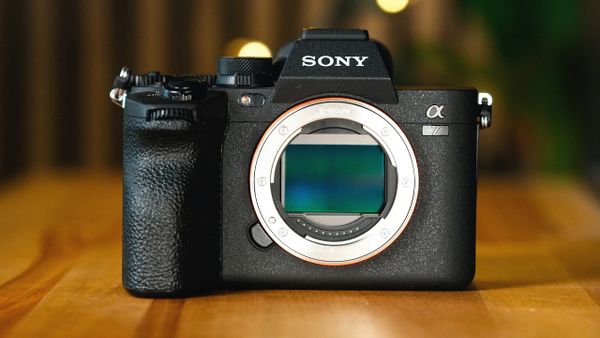
VistaVision’s influence shows up across digital cinema. Large-format digital sensors on cameras like the ARRI Alexa Mini LF and Sony Venice 2 are close to the VistaVision frame size, and “VV” labels on sensors and lenses, like RED’s V-Raptor VV, refer to the format.
That means filmmakers can get much of the large-format look without film. Open gate recording on newer cameras captures the full sensor in a similar shape, covered in What Is Open Gate? Why Filmmakers Want It, and Which Cameras Have It.
Competitive Context
VistaVision sits between standard 35mm and the largest formats. 65mm and IMAX film offer even bigger negatives, covered in Christopher Nolan’s The Odyssey and the IMAX Film Cameras Behind It, while digital systems like Sony’s new RIALTO 65 bring 65mm-class sensors to digital, covered in Sony Puts a Price on 65mm: The RIALTO 65 Costs $80,000 and Ships in 2027.
Not everyone thinks bigger is always better. For a counterpoint, see The Argument Against Large Format.
The Signal in the Noise
VistaVision’s return is about more than nostalgia. It gives filmmakers a large-format film image with a distinctive look, at a time when studios want theatrical releases to stand apart from streaming.
For most filmmakers, the takeaway is the look rather than the format. Large-format digital sensors, wide lenses and deep, carefully composed frames get you much of the way there without rebuilt 1950s cameras.
Would you shoot on VistaVision if you had the budget, or does large-format digital get close enough? Share your take in the comments.
Resources & Reads
- Why a Classic Wide Screen Movie Format From the 1950s Is Making a Comeback — NPR
- VistaVision, a Vintage Format Left for Dead, Is Revived in One Battle After Another and More — AP via U.S. News
- “Nothing Casual in Every Frame”: Inside the VistaVision Cinematography of Digger
- What Is Open Gate? Why Filmmakers Want It, and Which Cameras Have It